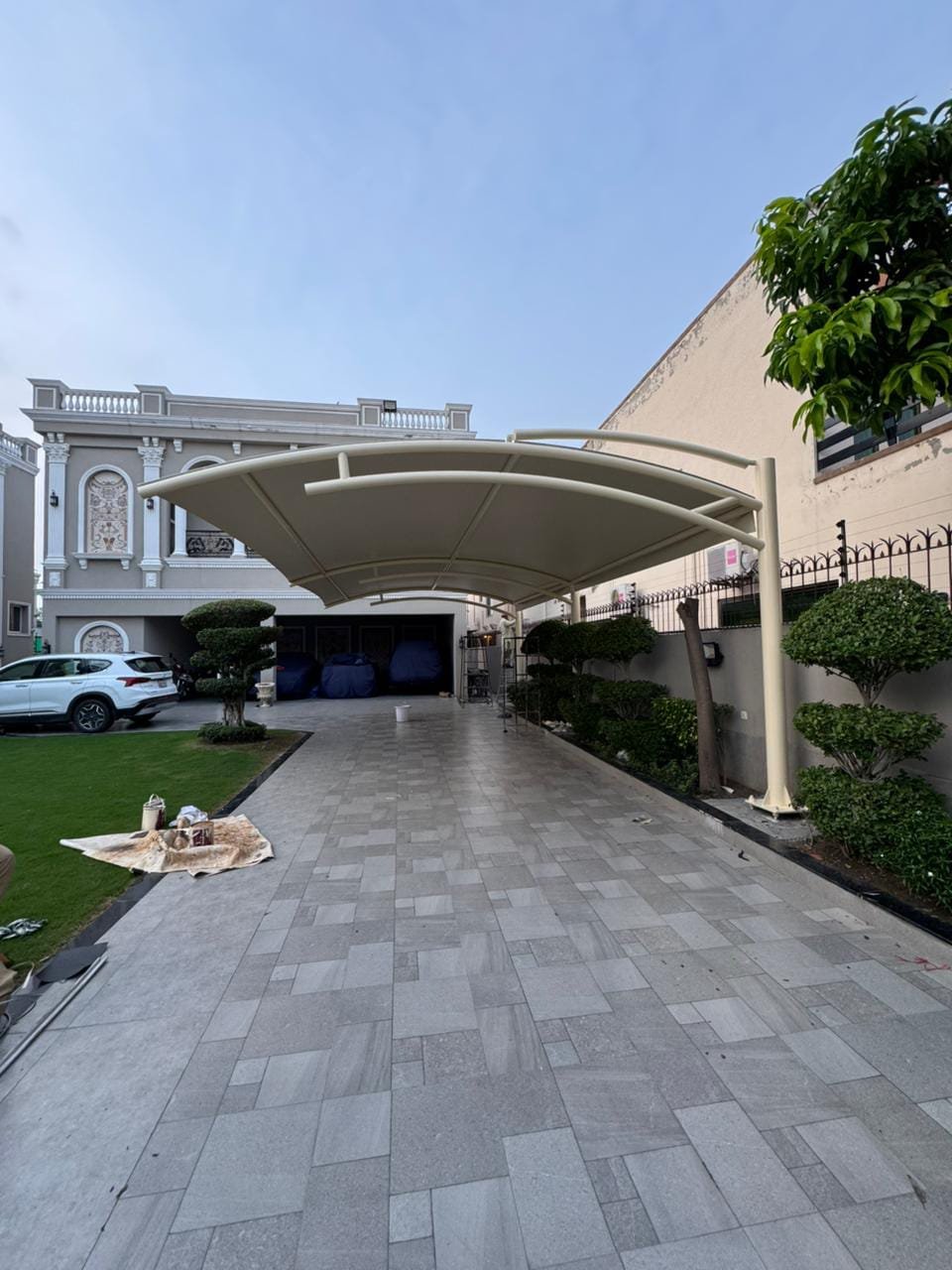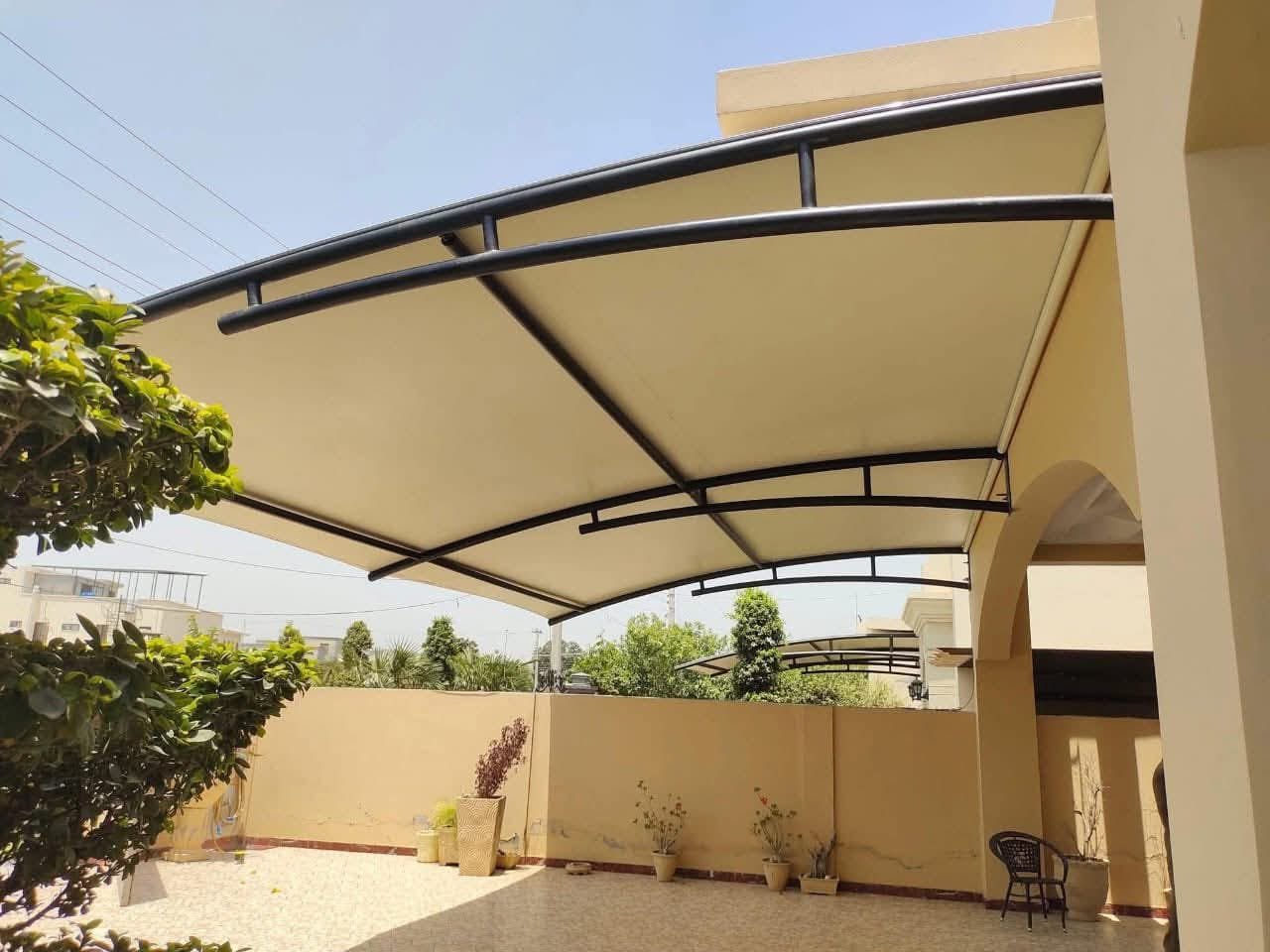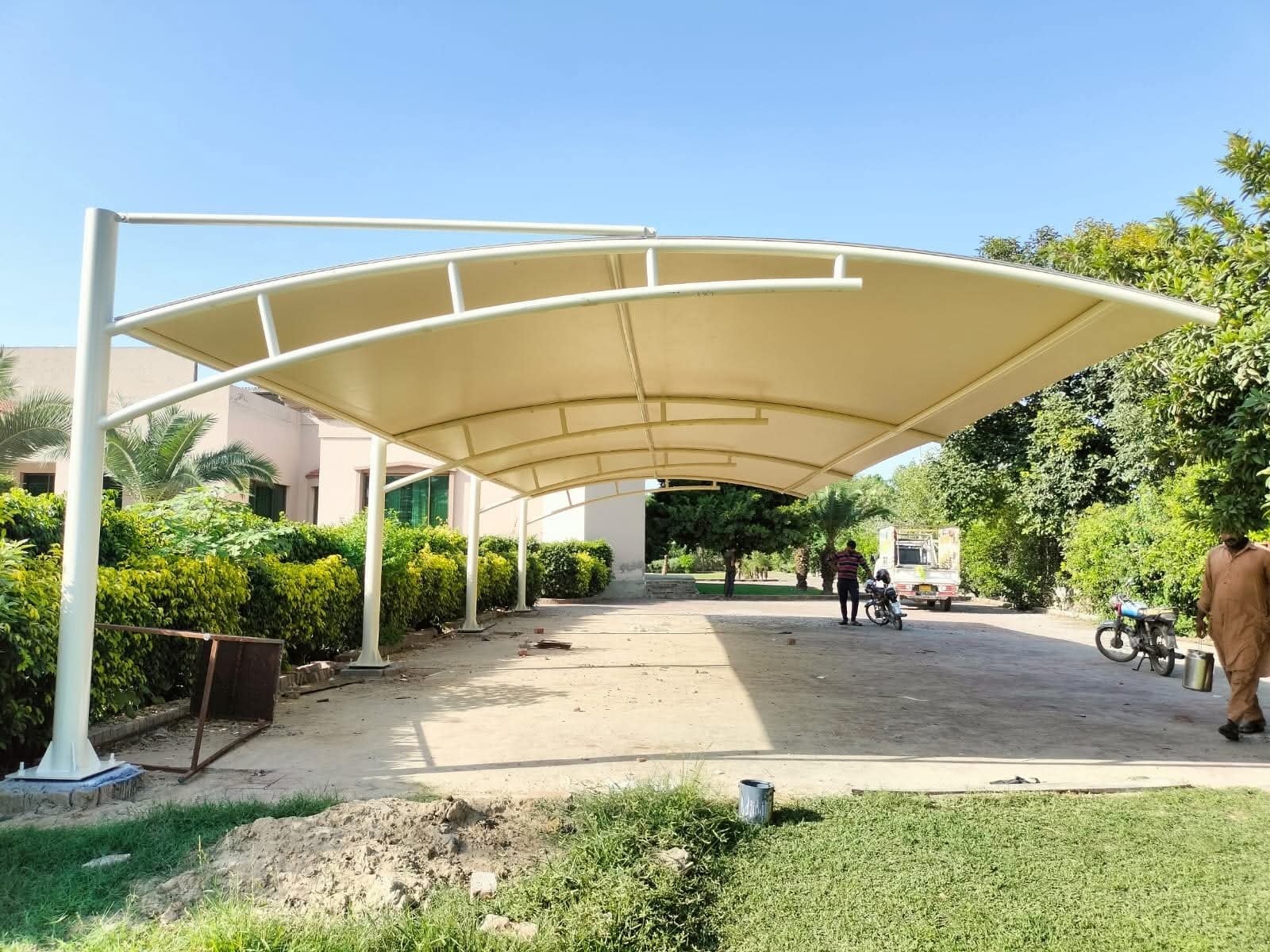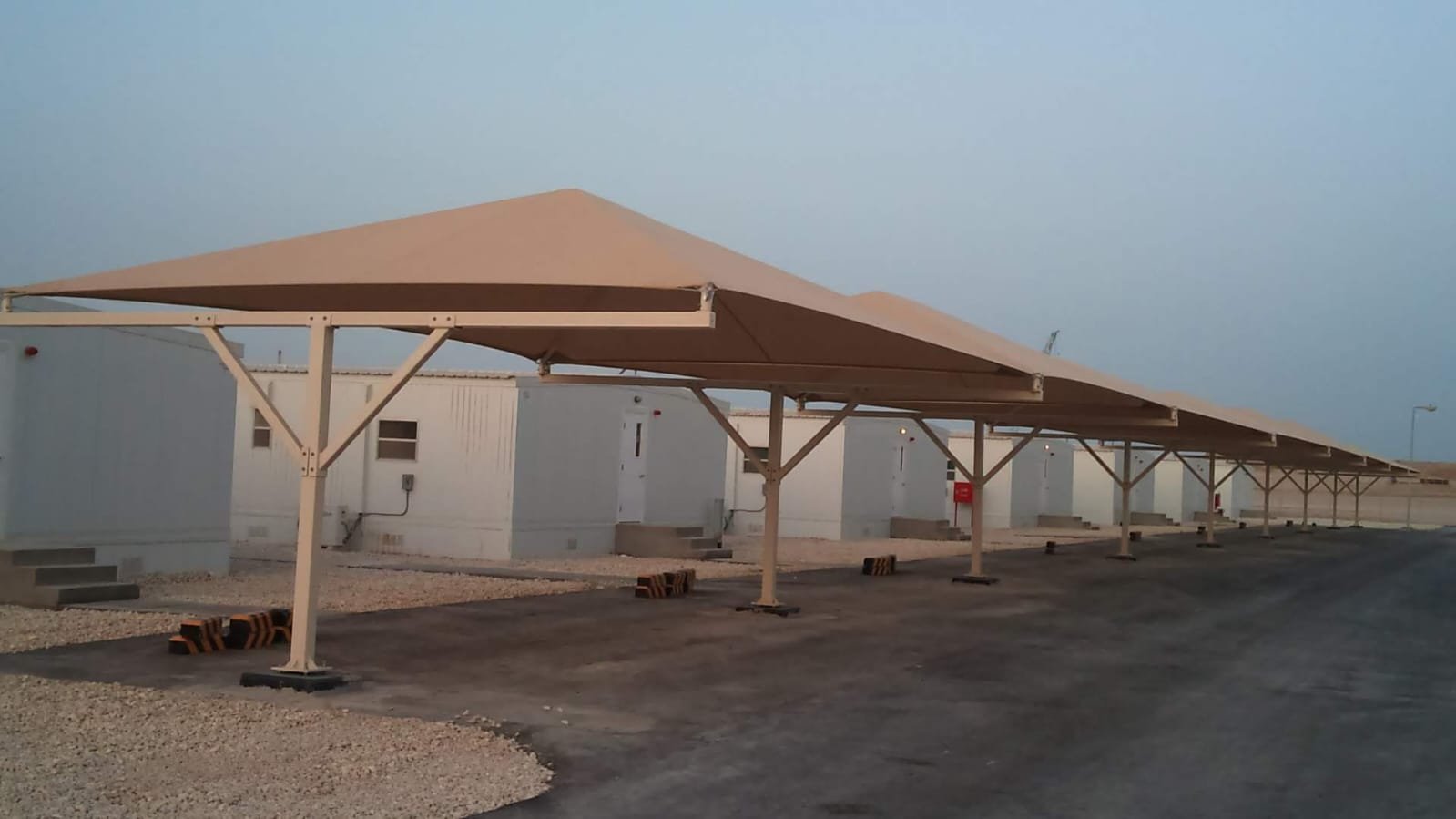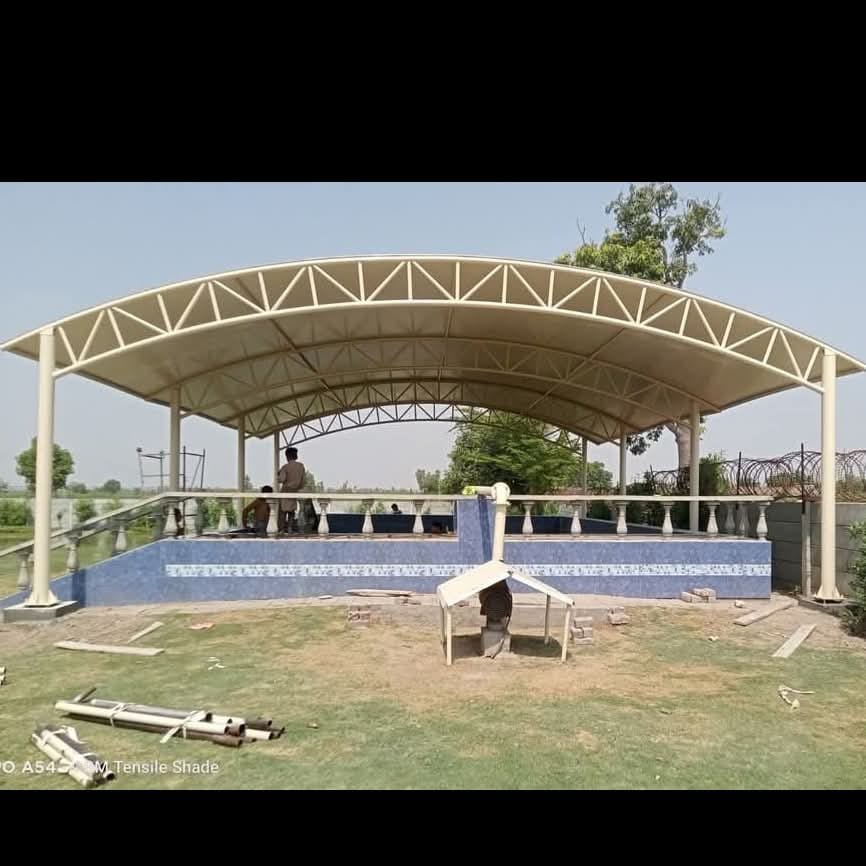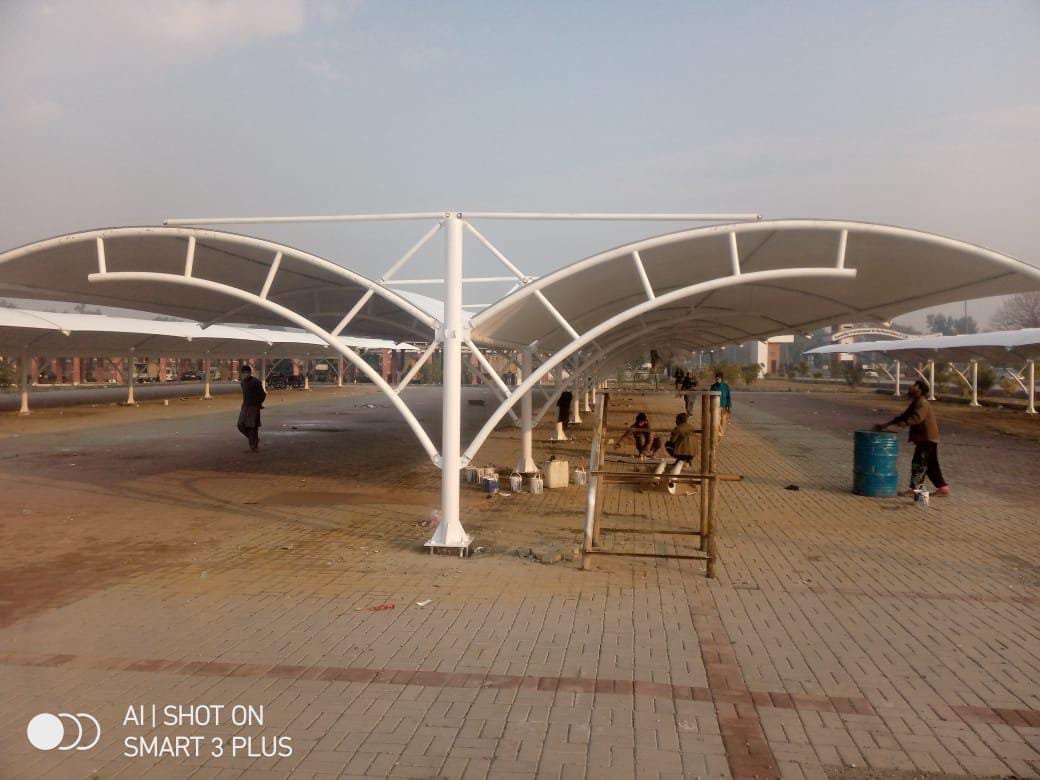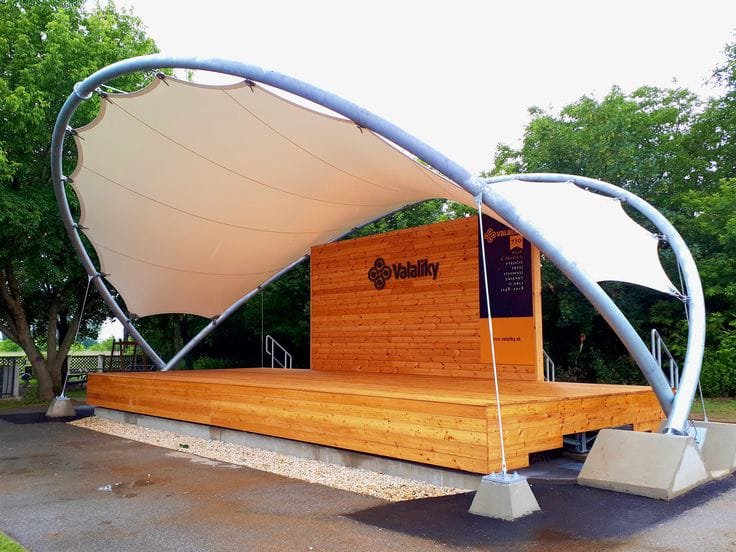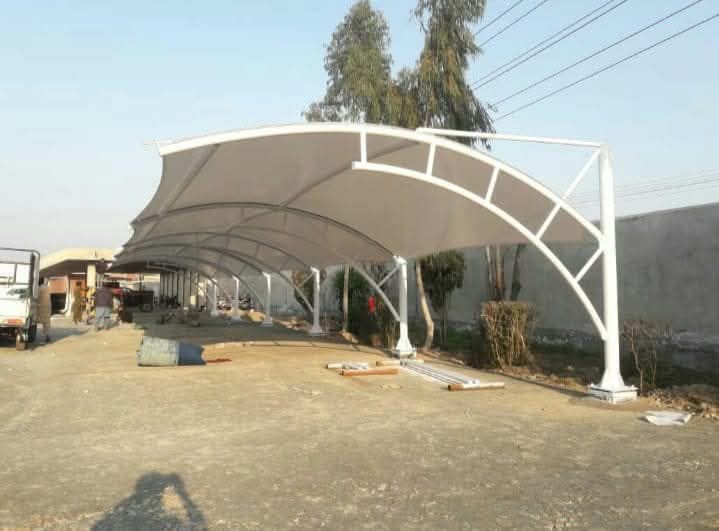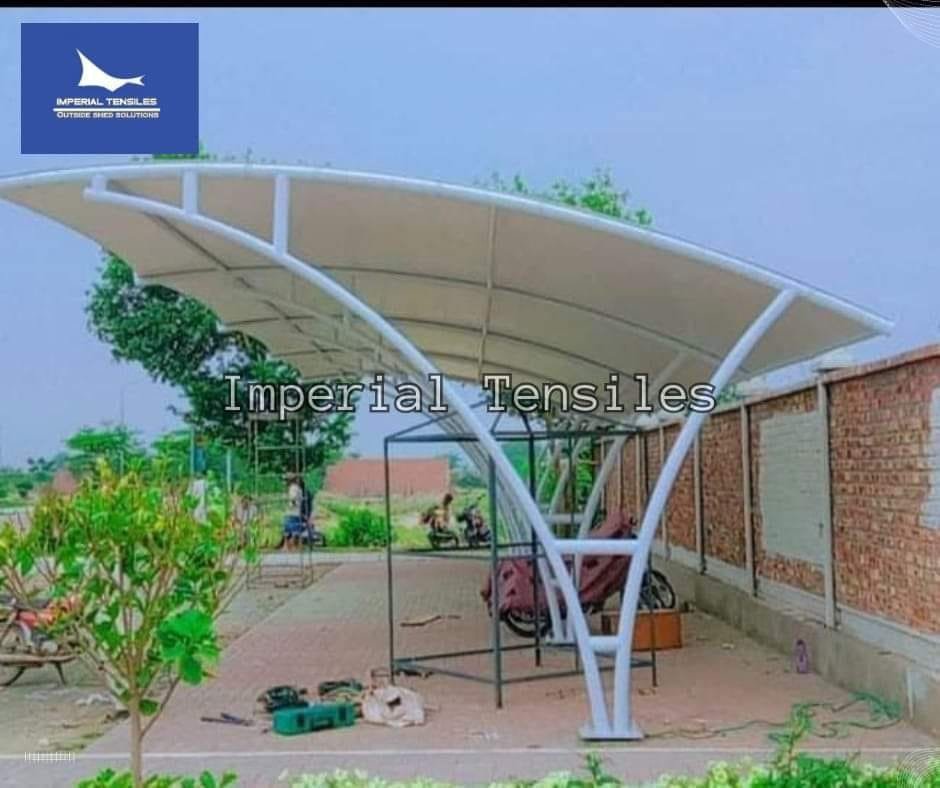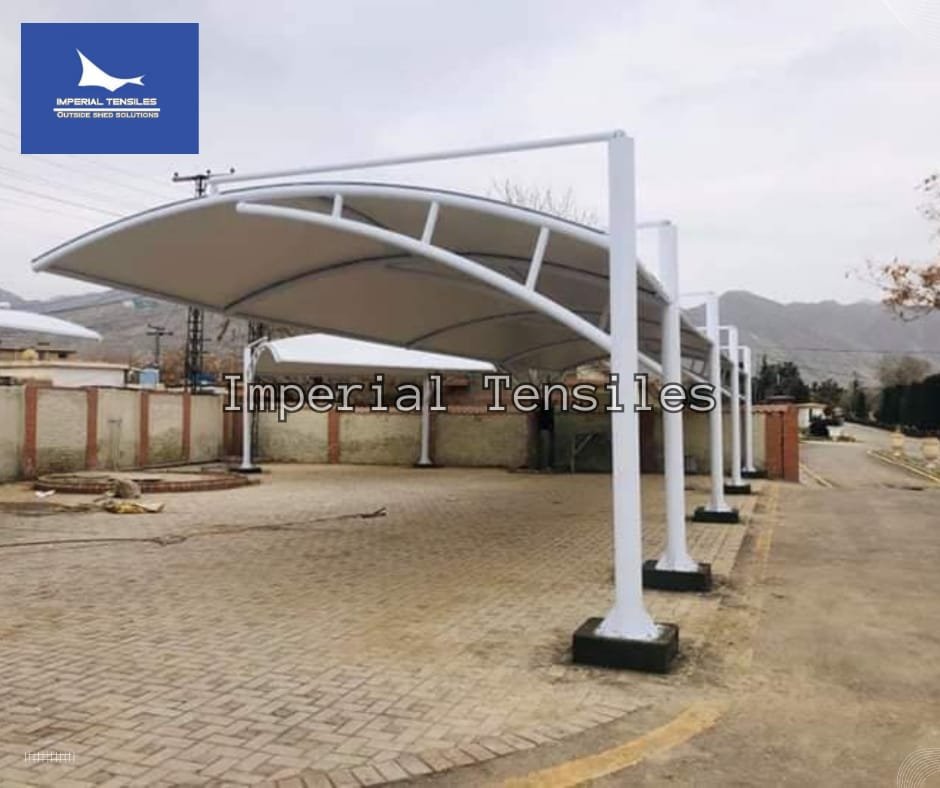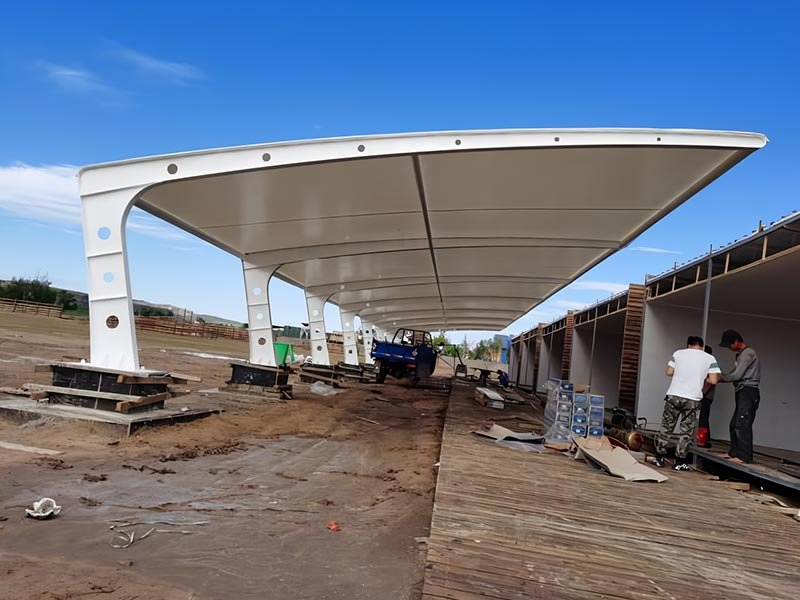
In crowded cities like Lahore, Karachi and Rawalpindi, the rooftop is often the only open space a family has. A well-designed tensile shade can turn a hot, unused roof into a place for evening tea, children’s play, plants or even a small gym. But rooftops are different from ground-level sites. The structure sits higher, faces stronger wind, and must be fixed to an existing slab. This guide explains what to check before you install a rooftop shade.
Why Rooftop Shades Are Popular
- Heat reduction: shading the roof slab reduces direct sun on it, which can help the rooms below stay cooler in summer.
- Extra living space: a covered roof becomes usable from early morning to late evening.
- Light structure: tensile fabric and steel are much lighter than an extra concrete floor.
- Quick installation: most residential rooftop shades are installed in a few days.
Step 1: Check the Roof Slab
The most important question is whether your slab can safely carry the structure and wind forces.
- Ask the installer how the columns will be fixed — usually with steel base plates and anchor bolts drilled into the slab or into concrete pedestals.
- Avoid drilling near the edge of the slab, over cracks or close to water tanks.
- For older houses, or if you see cracks or leakage, get a structural engineer to look at the slab first.
- Make sure drilling does not damage the existing waterproofing; holes must be sealed properly.
Step 2: Plan for Wind
Rooftops catch much more wind than ground-level porches, especially on corner houses and in open areas. Pakistan’s summer dust storms can be sudden and strong.
- Prefer lower, compact shapes over very tall, sail-like designs.
- Keep the fabric well tensioned — loose fabric flaps and puts shock loads on the frame.
- Ask how many anchor bolts each base plate will have and what size the steel columns are.
- For large shades, ask whether the design was checked for local wind speeds.
Step 3: Choose the Right Fabric
| Need | Suggested Fabric |
|---|---|
| Sunshade with airflow (plants, sitting area) | HDPE shade net |
| Rain protection (gym, laundry, storage) | PVC coated polyester |
| Long life with easy cleaning | PVDF coated fabric |
Breathable HDPE lets hot air escape, which keeps rooftops more comfortable in peak summer. If you need protection from rain, choose a waterproof fabric and plan drainage carefully. Read our comparison of PVC vs HDPE vs PVDF fabrics.
Step 4: Drainage and Water Ponding
A waterproof rooftop shade collects a lot of rain water. Without a plan, water can pour onto the parapet, the stairs or the neighbour’s roof.
- Give the fabric enough slope so water runs off quickly.
- Direct the run-off towards existing roof drains.
- Never allow flat areas where water can pond — ponding adds heavy weight and can tear the fabric.
Step 5: Shape and Layout Ideas
- Hypar (twisted four-point) shade: modern look, good rain run-off, ideal for sitting areas.
- Single-slope cantilever: keeps the front open with columns on one side only.
- Shade sails between walls and posts: budget-friendly for small rooftops.
- Retractable shade: lets you enjoy open sky on winter evenings.
What Affects the Cost?
- Covered area in square feet
- Fabric type and grade
- Steel size and finish (paint or powder coating)
- Number of columns and base plates
- Height of the building — material lifting and safety arrangements add labour cost
- Any slab repair or waterproofing work needed
For general rate guidance, see our tensile shade price guide.
Safety Checklist Before Installation
- ☐ Slab condition checked (engineer for old or cracked slabs)
- ☐ Column positions away from slab edges and tanks
- ☐ Anchor bolts and base plates specified in the quotation
- ☐ Fabric tension and wind design discussed
- ☐ Drainage path planned
- ☐ Written warranty for fabric and workmanship
Frequently Asked Questions
Can a tensile shade be installed on any roof?
Most concrete roofs can carry a light tensile structure, but older or damaged slabs should be checked by an engineer first.
Will drilling damage my roof waterproofing?
It can if done carelessly. A good installer seals every anchor hole and restores the waterproofing around base plates.
Is a rooftop shade safe in storms?
Yes, when the steel, anchoring and fabric tension are designed for wind. Loose or poorly fixed shades are the main risk.
Conclusion
A rooftop tensile shade is one of the simplest ways to add usable, cooler space to a Pakistani home. Start with the slab, design for wind, choose the right fabric and plan drainage — and your rooftop will serve you comfortably for years.