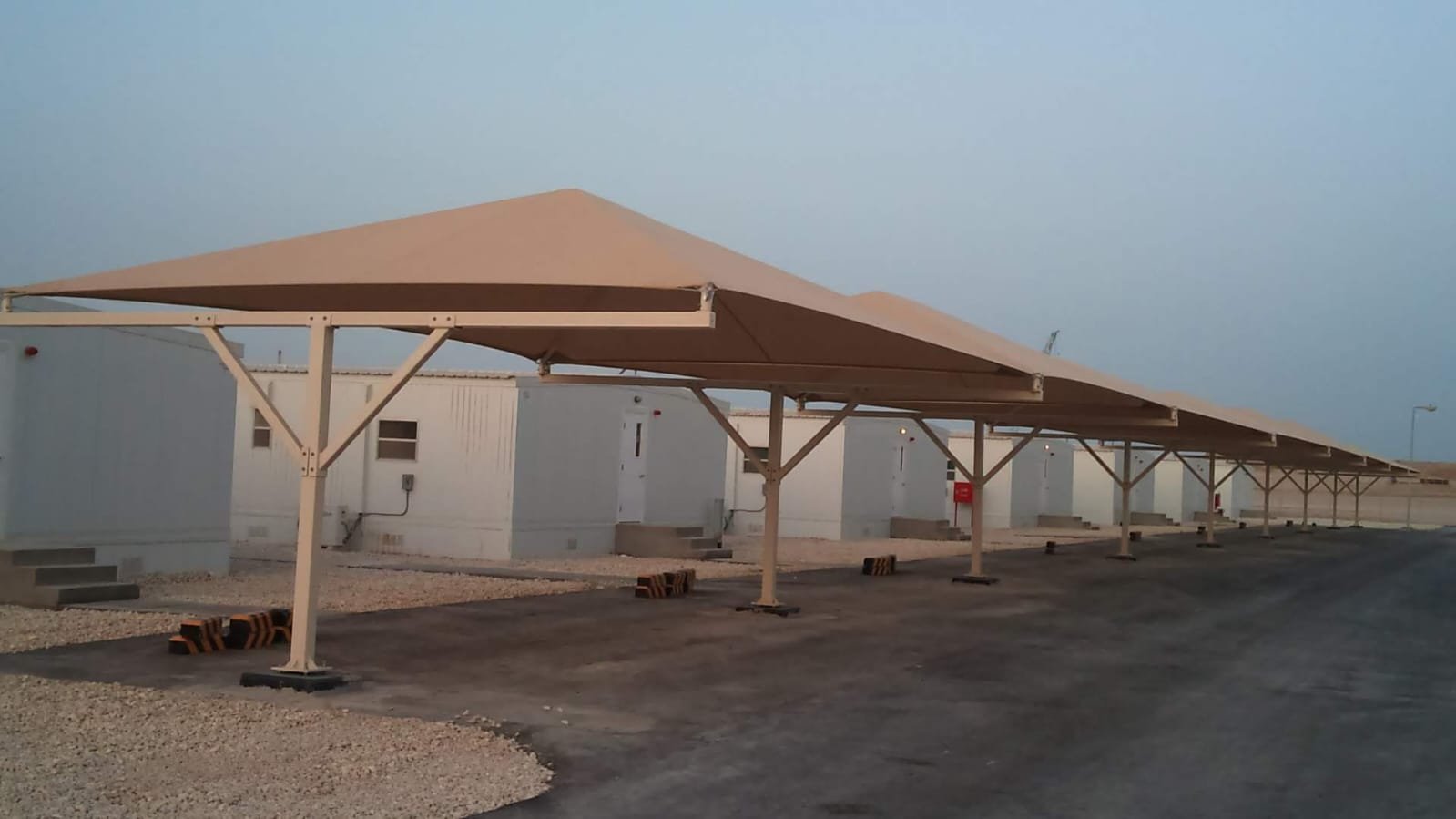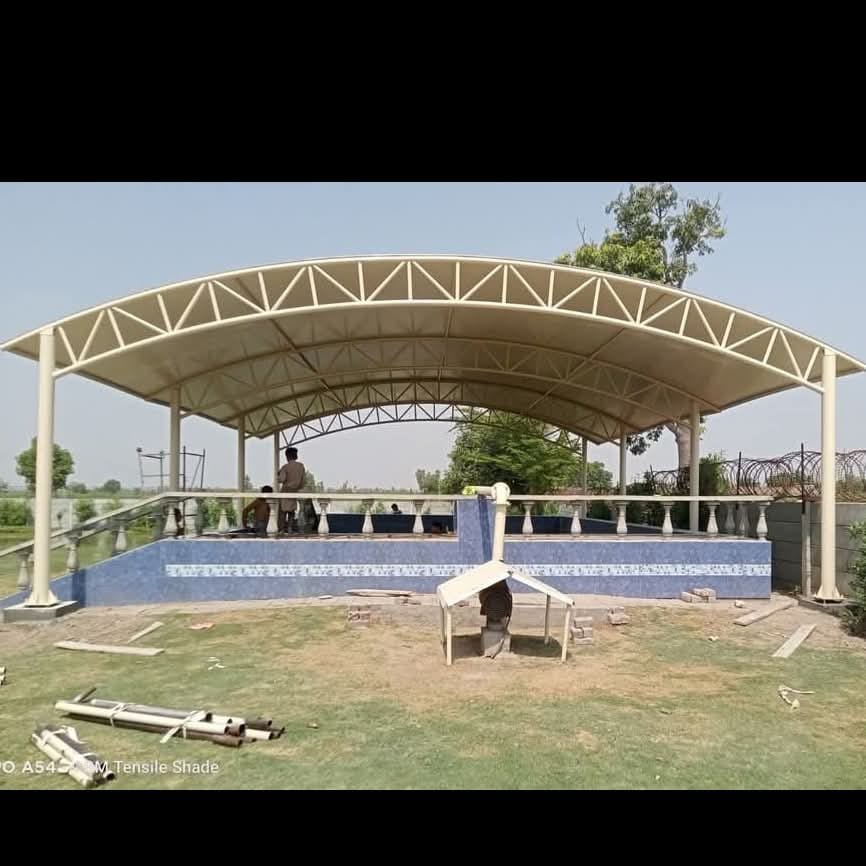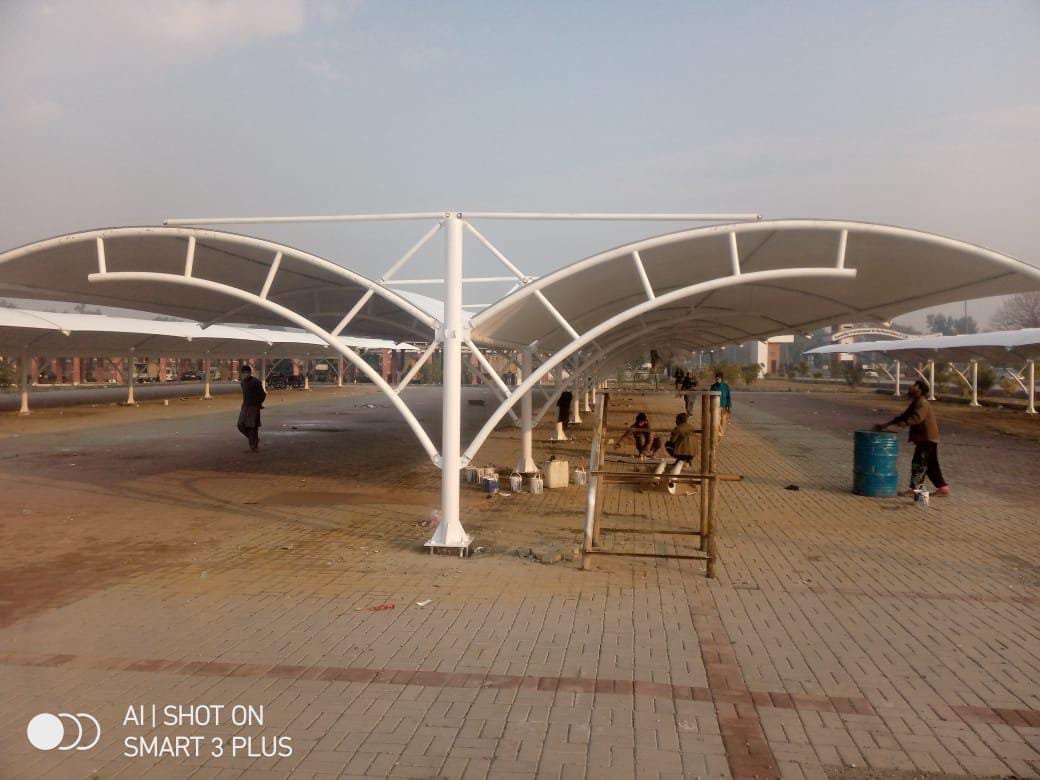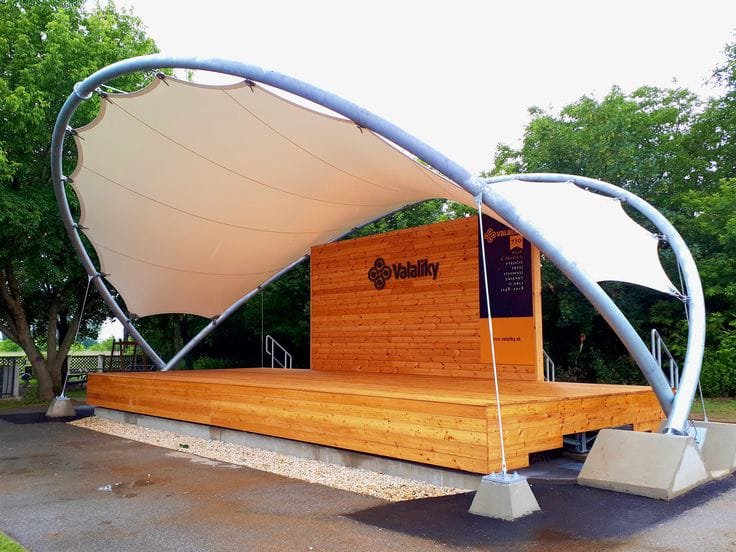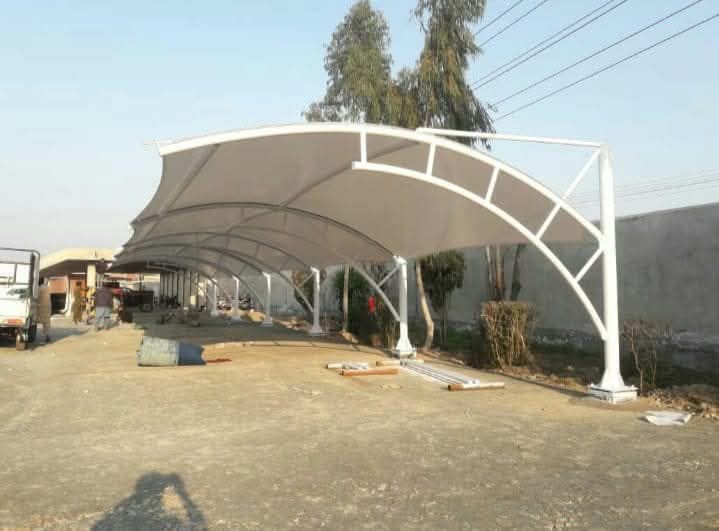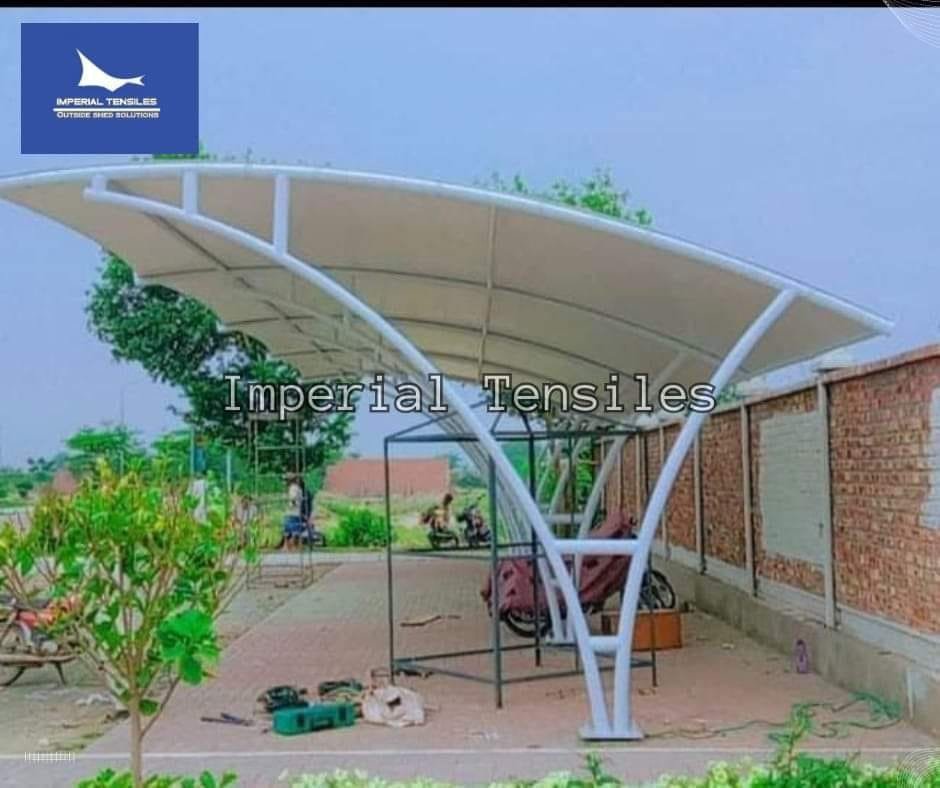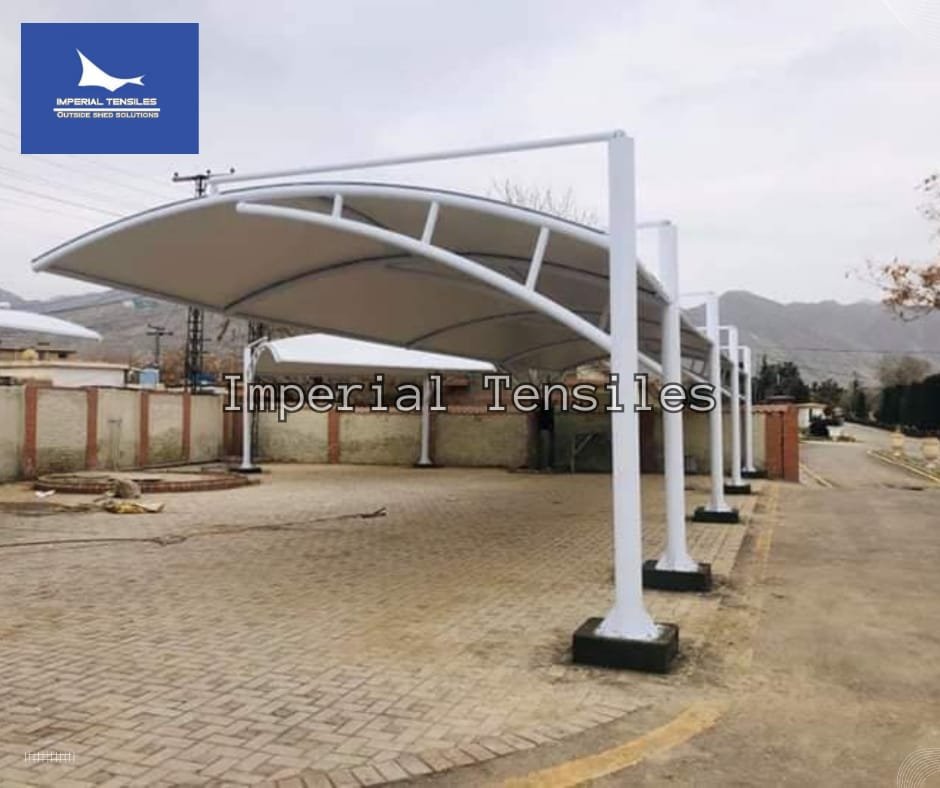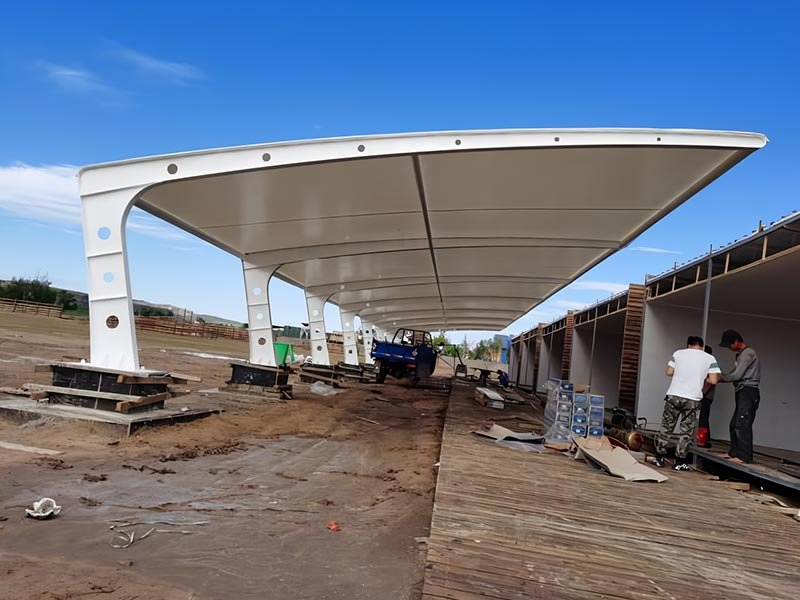
A weatherproof tensile shade is one of the smartest investments you can make for an outdoor space in Pakistan. Summer temperatures in Karachi, Lahore, Multan, Hyderabad and Sukkur regularly cross 40°C, the monsoon arrives with sudden heavy downpours, and pre-monsoon dust storms push strong gusts across open ground. Any roof that sits outside all year has to survive all of this.
In this guide we explain exactly how a weatherproof tensile shade handles heat, rain, wind, dust and salty coastal air. You will also learn which fabric to choose, which engineering details matter most, and which questions to ask before you approve a design.
Table of Contents
What Is a Weatherproof Tensile Shade?
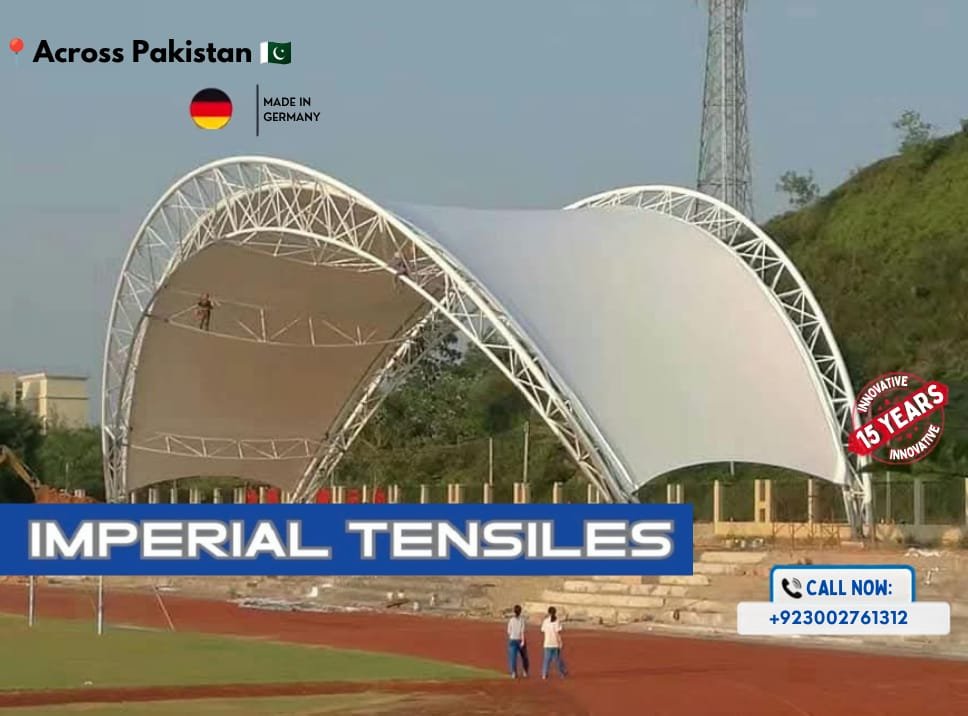
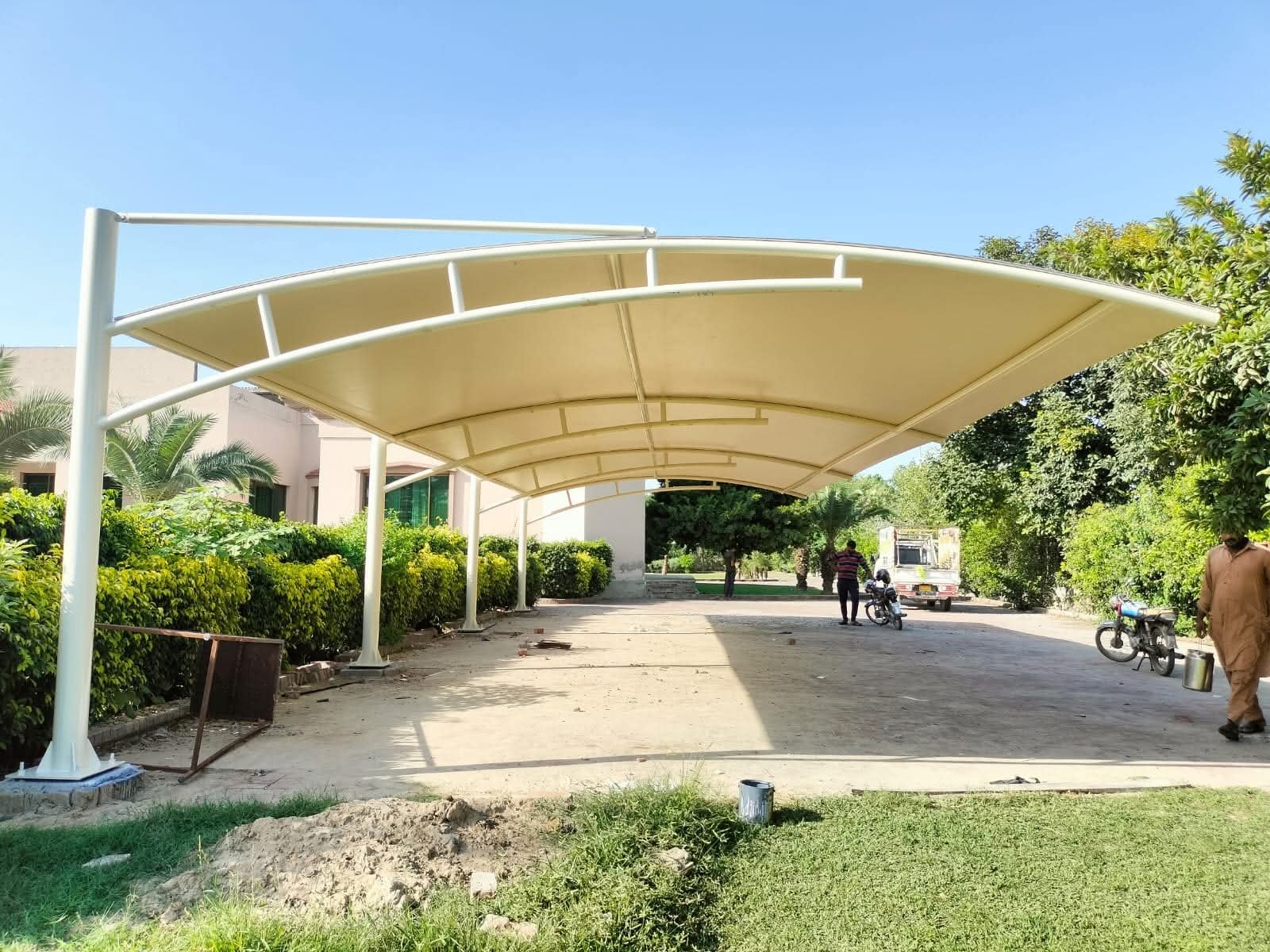
A tensile shade is a roof made from technical fabric that is stretched tightly between steel columns, arms and cables. The fabric carries load through tension, not through rigid beams. This is why tensile roofs can cover large areas with fewer columns and a much lighter frame than a conventional shed.
A weatherproof tensile shade goes one step further. It uses a waterproof, UV-stabilised membrane, a shape that sheds rainwater, foundations sized for local wind and a corrosion-protected steel frame. In short, it is designed for the real climate of the site rather than just for good looks.
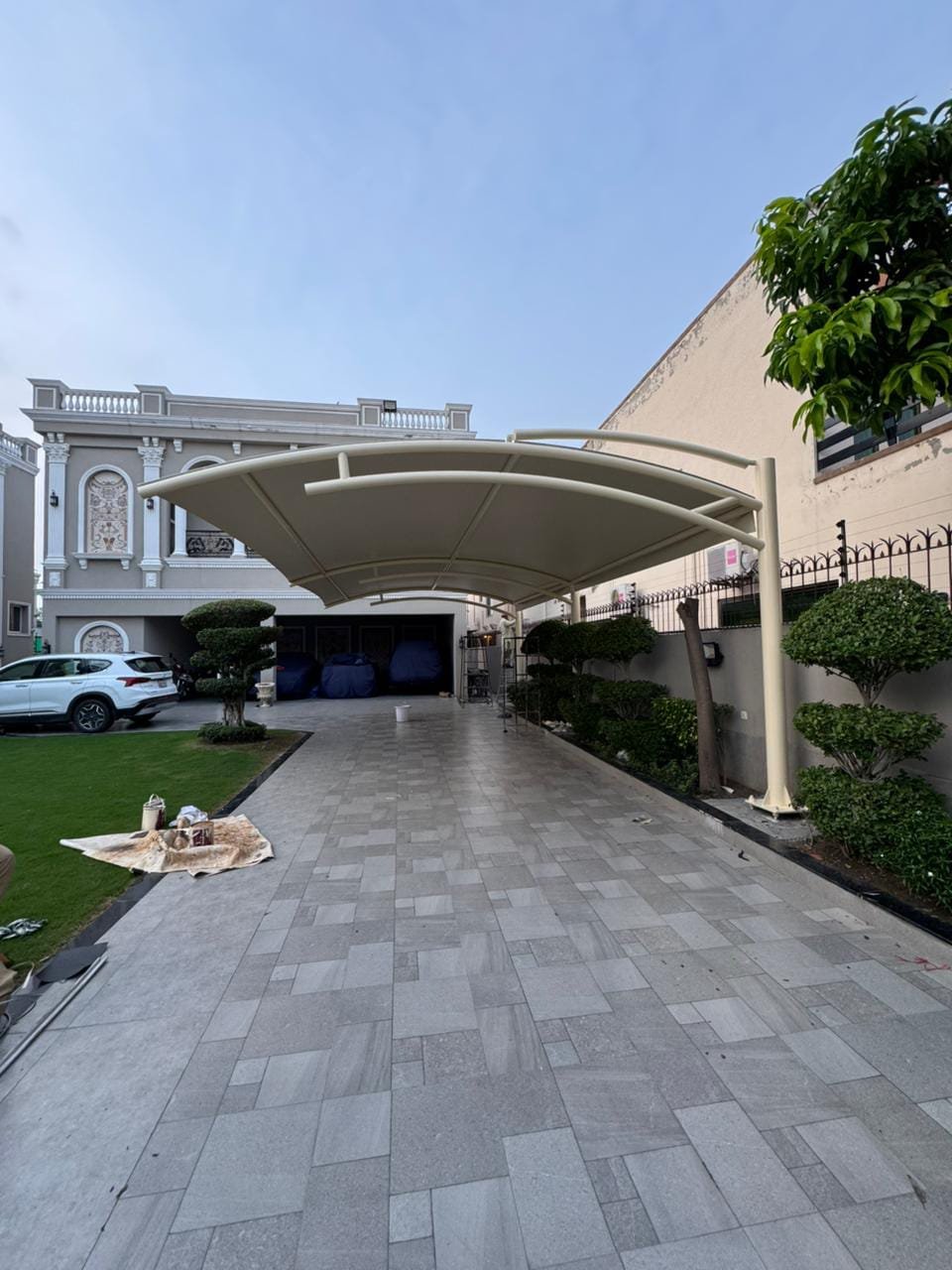
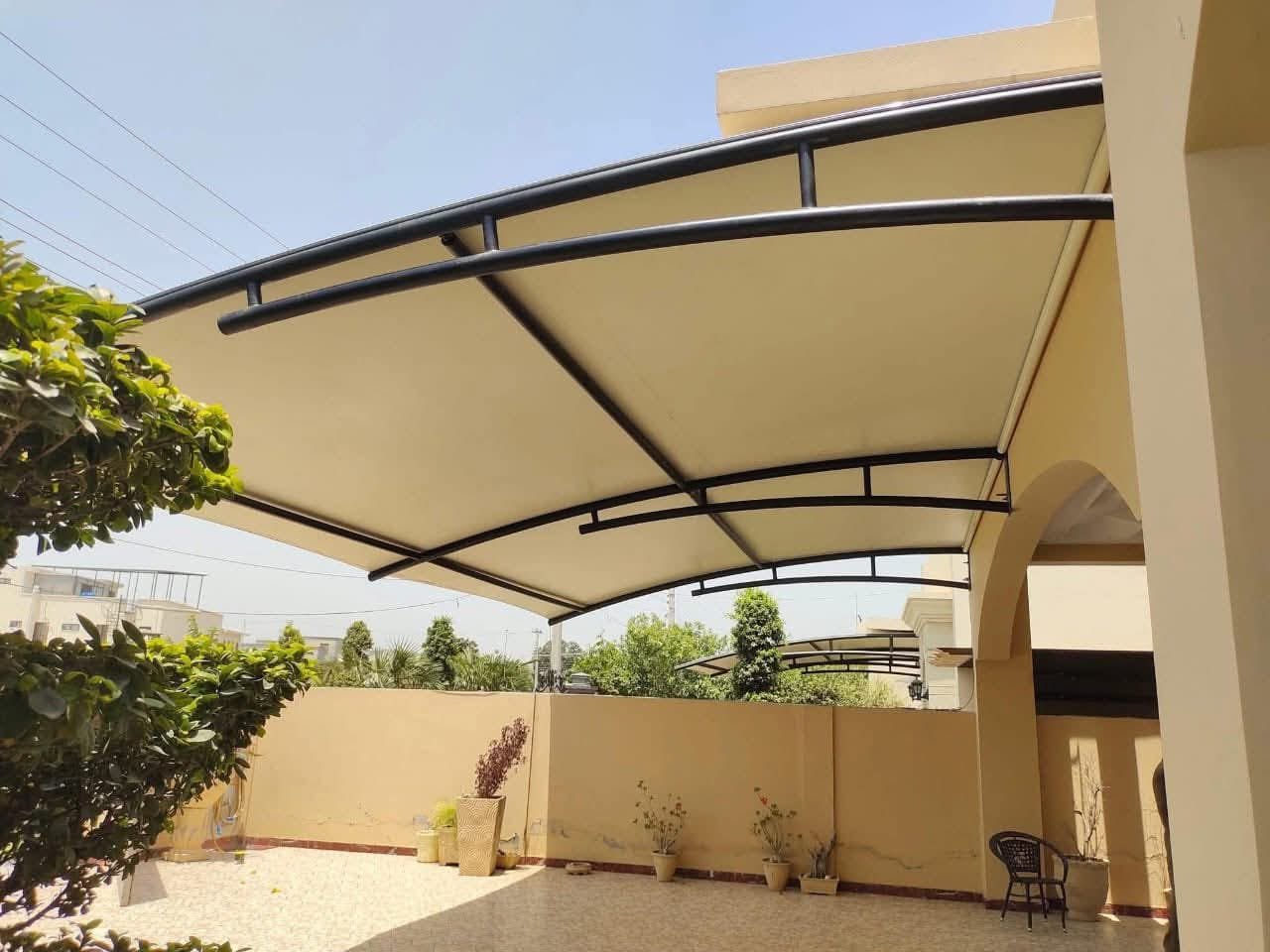
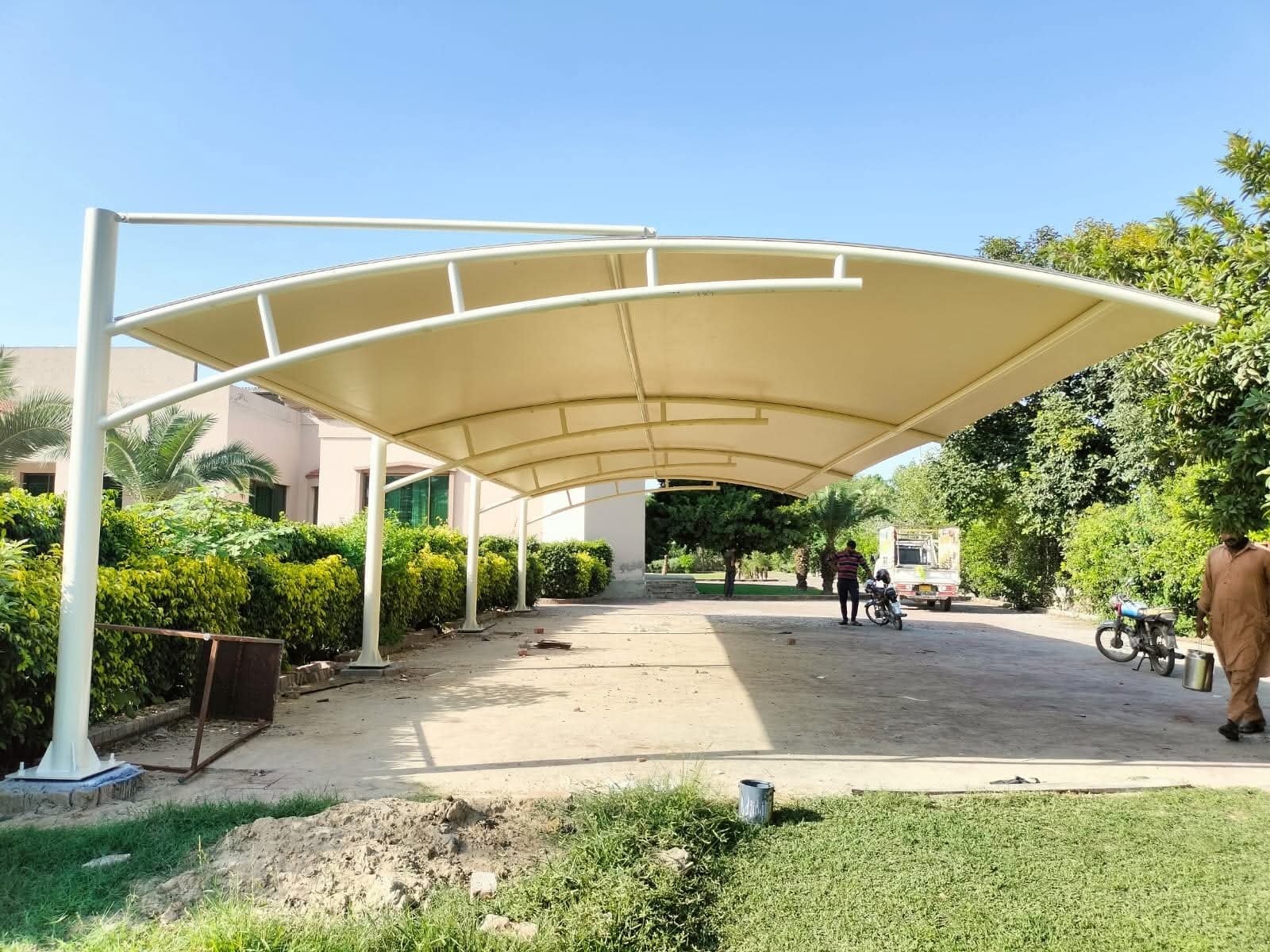
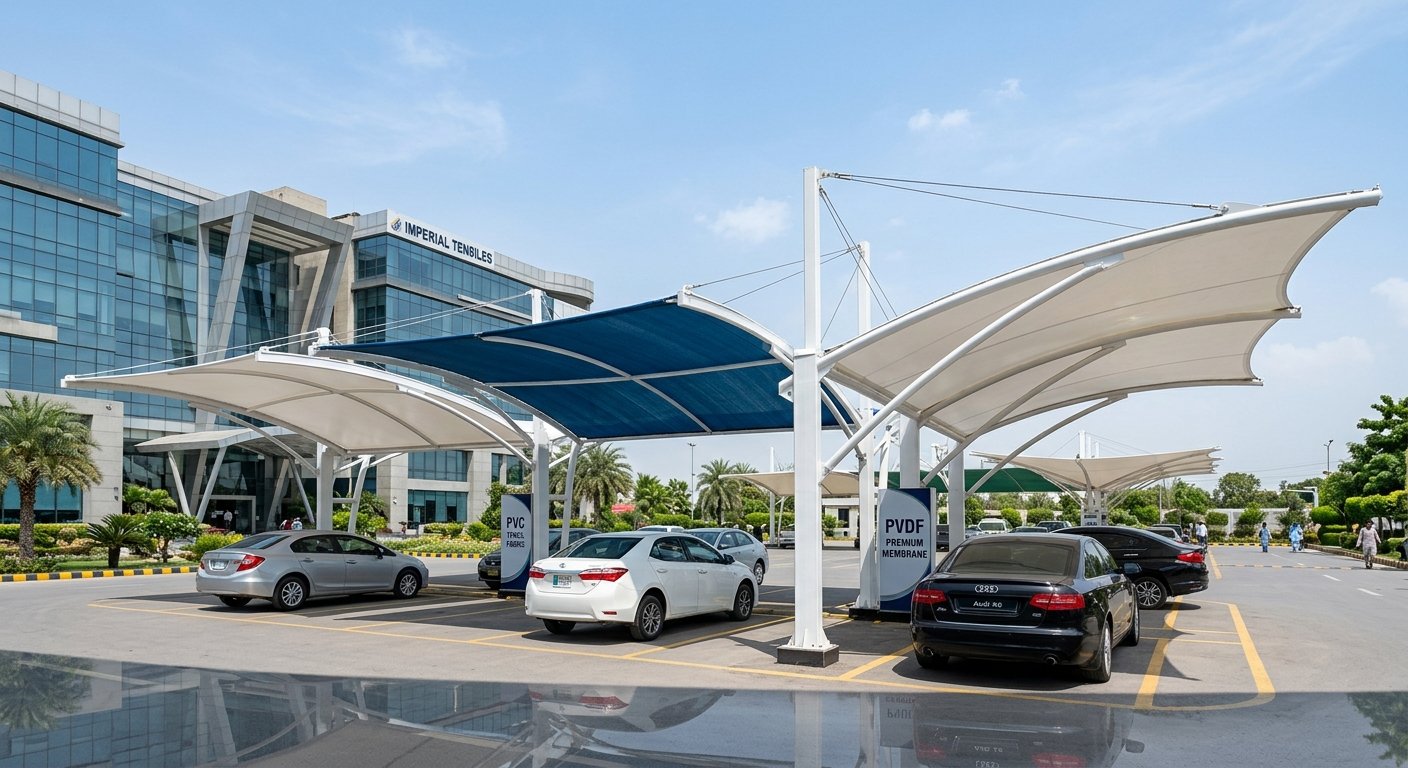
You will see this type of structure over car parking areas, school playgrounds, mosque courtyards, hospital entrances, restaurant terraces, swimming pools and home rooftops across Pakistan.
Why Pakistan’s Climate Is Tough on Outdoor Roofs
Pakistan has one of the most demanding climates for outdoor structures in the region. Within a single year, the same roof may face:
- Extreme heat: Long summers with intense sunshine and very high UV levels.
- Monsoon rain: Short, heavy bursts of rain between July and September that test drainage.
- Strong winds: Dust storms and thunderstorm gusts, especially before the monsoon.
- Dust: Fine dust that settles on every surface and dulls colours.
- Coastal humidity: Salt-laden air in Karachi, Gwadar and other coastal areas that speeds up rust.
You can follow seasonal forecasts and warnings from the Pakistan Meteorological Department. A well-designed weatherproof tensile shade is planned with all of these conditions in mind from day one.
How a Weatherproof Tensile Shade Beats the Heat
Most traditional sheds use corrugated metal or fibre sheets. Metal absorbs sunlight and radiates that heat downwards. By mid-afternoon, the space under a metal roof can feel hotter than the open air around it.
A weatherproof tensile shade behaves very differently in strong sun:
- High reflection: Light-coloured PVC and PVDF-coated membranes reflect a large share of incoming sunlight instead of storing it as heat.
- UV protection: Quality membranes are UV-stabilised, so they block most of the ultraviolet rays that fade car paint, crack dashboards and damage skin.
- Natural ventilation: Tensile shades are usually raised and open at the sides, so hot air rises and escapes instead of getting trapped under a flat ceiling.
- Soft, even light: The fabric diffuses daylight, so the area underneath stays bright without harsh glare.
Choosing the Right Colour
Colour has a direct effect on temperature. White, off-white, cream and light grey fabrics keep the space below noticeably cooler than dark colours. If you want to use a brand colour, apply it to the edges, columns or a small accent panel rather than the entire canopy.
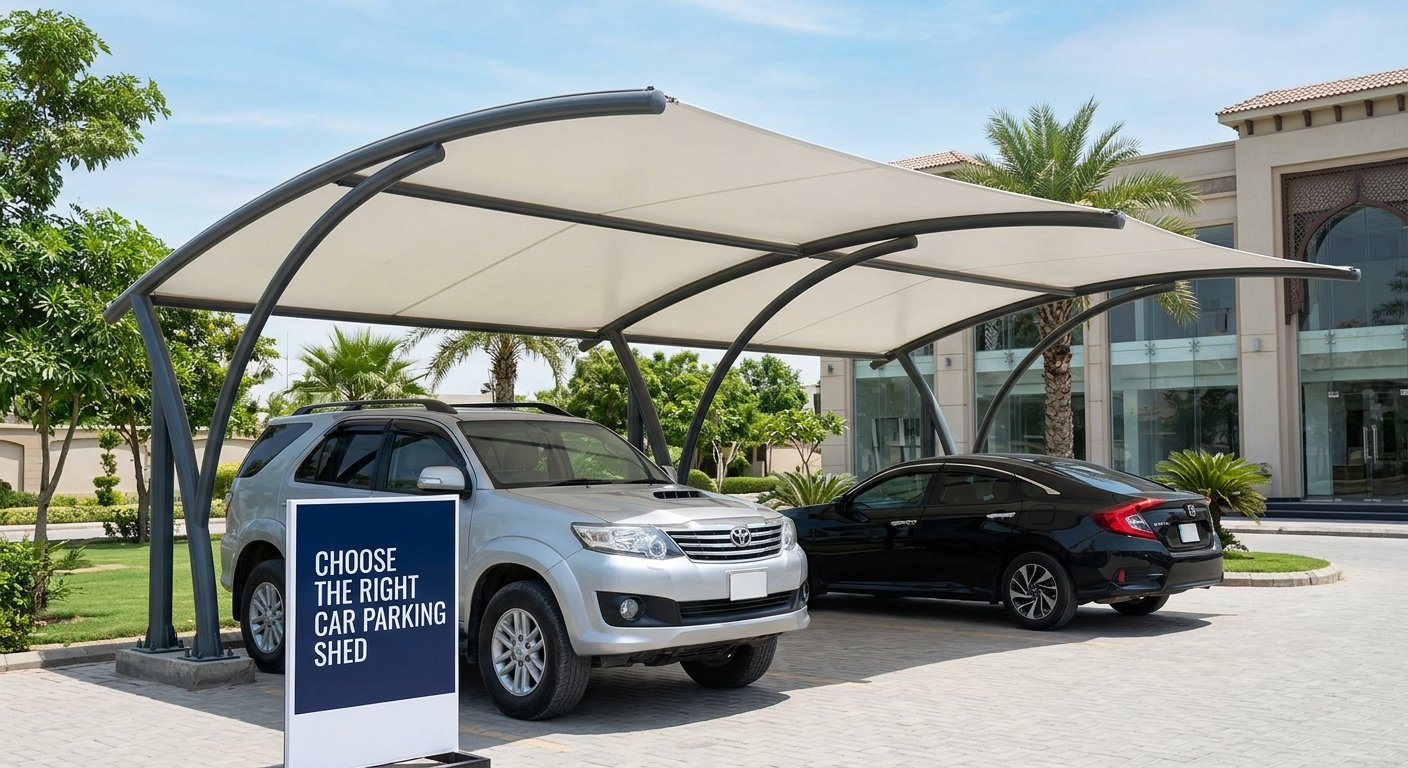
For parking areas and outdoor seating, a light-coloured weatherproof tensile shade is almost always the most comfortable choice in Pakistani summers.
How a Weatherproof Tensile Shade Handles Monsoon Rain
Rain is where poorly installed shades fail first. When water collects in a flat or sagging section of fabric, it creates a problem known as ponding. Each pool of water adds weight, stretches the fabric further and collects even more water.
Left alone, ponding can tear the membrane, bend the arms or overload the columns. A properly engineered weatherproof tensile shade prevents this in three ways.
1. Double-Curved Shapes
Hypar (saddle), cone, arch and wave shapes have no flat areas. Water runs off quickly in a controlled direction, even during heavy downpours.
2. Correct Pre-Tension
The membrane is stretched to a calculated tension during installation. A tight surface does not sag under the weight of rain, so water cannot settle.
3. Planned Drainage Points
Good designers decide in advance where the water will go. Low corners can lead into gutters, drains or planting areas so that water does not pour onto walkways, cars or entrances.
Waterproof vs Breathable Fabric
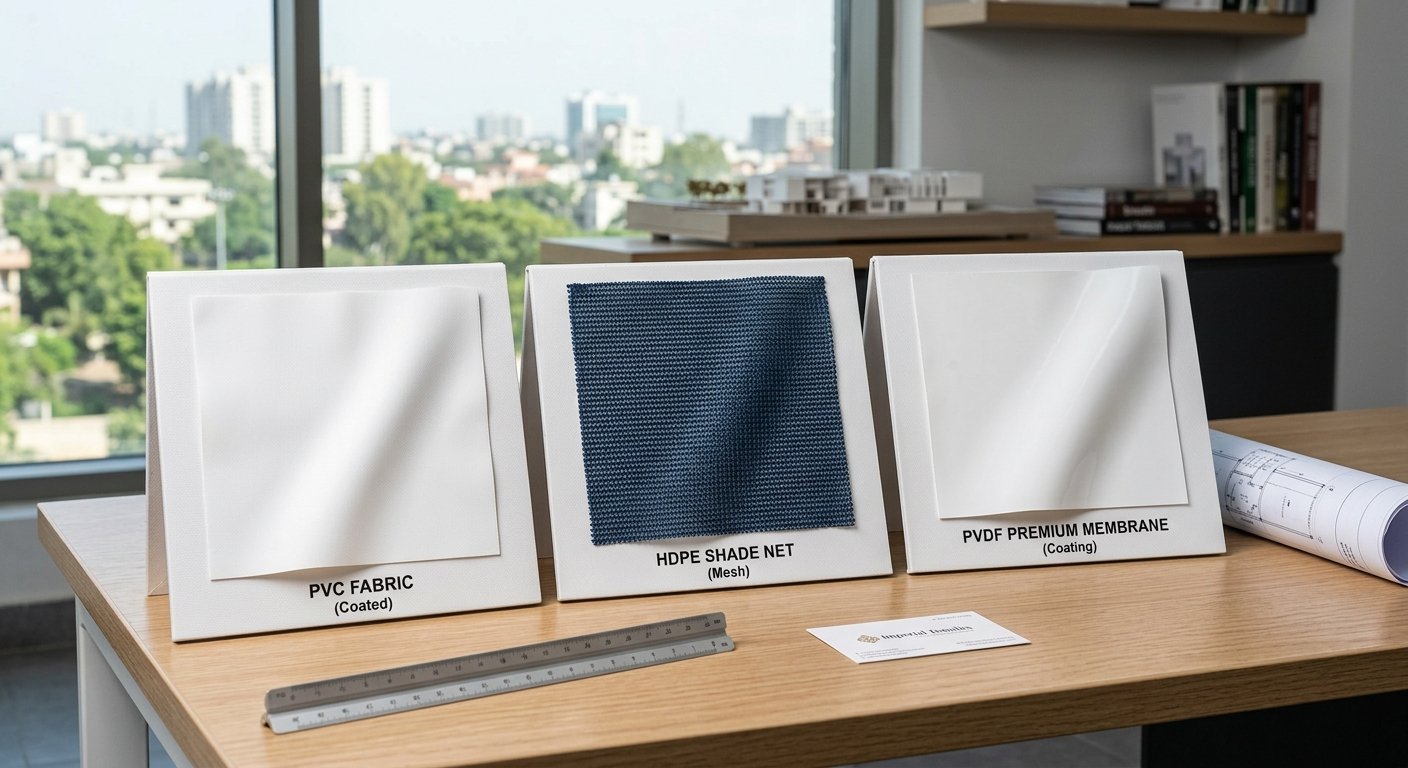
It is important to know that not every shade fabric is waterproof. PVC and PVDF-coated membranes are fully waterproof. HDPE shade net is breathable and lets rain pass through.
HDPE is a great option for areas that only need sun protection, such as playgrounds or nurseries. If you need to keep vehicles, people or equipment dry, choose a coated membrane for your weatherproof tensile shade.
Wind and Dust Storms: Why Engineering Matters Most
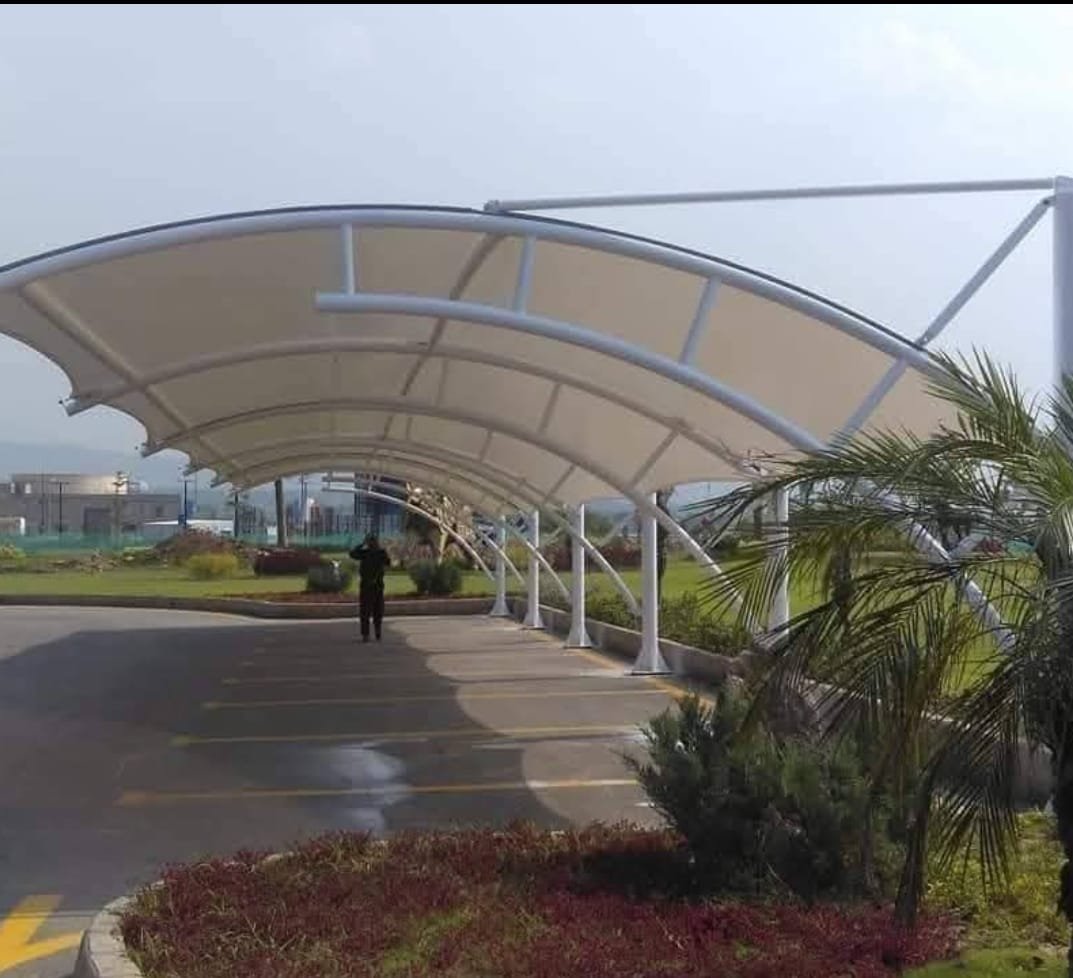
Because fabric is light, wind does not push on a tensile roof the way it would on a solid wall. However, wind flowing over a canopy creates uplift, a force that tries to lift the roof upwards. On a windy day, the fabric is constantly pulling on its fixings.
The fabric itself is rarely the weak point. Safety depends on the structure behind it. A weatherproof tensile shade needs the following details to stay standing in storms.
Strong Foundations
Every column must sit on a properly sized concrete footing with correctly placed anchor bolts. Shallow or undersized bases are the most common reason sheds tilt, crack floors or collapse in storms.
Correct Steel Sections
Columns, arms and beams should be selected for the span, the height and the local wind exposure. A canopy on an open rooftop or near the coast faces stronger wind than one in a sheltered courtyard.
Quality Cables and Fittings
Galvanised or stainless steel cables, turnbuckles, shackles and plates hold tension for years and resist rust. Cheap fittings can loosen or corrode, which lets the fabric flap and wear out quickly.
Reinforced Edges
Cable-reinforced or webbing-reinforced edges spread loads evenly along the fabric. This prevents tearing at the corners, which is where most stress builds up during gusts.
Dealing With Dust
Dust is less dangerous than wind, but it affects appearance. Smooth coated membranes, especially PVDF top-coated fabric, shed dust more easily than rough surfaces. A simple wash with clean water and a soft brush restores the look of a weatherproof tensile shade.
Coastal Areas: Protecting Against Salt and Humidity
If your project is in Karachi, Gwadar, Thatta or any other coastal location, salt in the air will attack exposed steel much faster than inland. Rust usually starts at welds, bolt holes and base plates where water collects.
For coastal sites, a weatherproof tensile shade should include:
- Hot-dip galvanised steel or a high-quality multi-coat paint system.
- Stainless steel or galvanised cables and fittings.
- Base plates raised slightly above ground level so they do not sit in standing water.
- Sealed bolt holes and properly finished welds.
These steps add a little to the initial cost but can add many years to the life of the frame.
Best Fabric for a Weatherproof Tensile Shade in Pakistan
The right fabric depends on how you will use the space and how much rain protection you need. Here is a simple comparison:
| Condition | Recommended fabric | Main benefit |
|---|---|---|
| Strong sun, rain not important | HDPE shade net | Breathable, cool and economical |
| Sun plus monsoon rain | PVC-coated polyester membrane | Waterproof and cost-effective |
| Premium, long-life projects | PVDF-coated membrane | Better dirt resistance and longer colour life |
| Coastal or humid sites | Coated membrane with galvanised frame | Protects the structure from corrosion |
For a full material comparison, read our guide on PVC vs HDPE vs PVDF tensile fabric.
Where a Weatherproof Tensile Shade Works Best
Because it is light, flexible in shape and quick to install, a weatherproof tensile shade suits a wide range of spaces:
- Car parking: Protects vehicles from heat, UV and rain. See our article on the benefits of tensile car parking sheds.
- Schools and playgrounds: Keeps children cool during break times and sports activities.
- Mosques: Covers courtyards for Friday and Eid prayers. Read our guide to mosque tensile sheds.
- Swimming pools: Reduces sunburn and water evaporation. See our swimming pool shading guide.
- Commercial entrances: Creates a welcoming, branded entry for shops, offices and hospitals.
- Homes: Turns rooftops, lawns and patios into usable outdoor rooms.
Tensile Fabric vs Metal Sheet Shed: A Quick Comparison
Many property owners in Pakistan compare a fabric canopy with a conventional metal sheet shed before deciding. Both have their place, but they behave very differently over a full year of heat, rain and wind.
| Factor | Tensile fabric canopy | Metal sheet shed |
|---|---|---|
| Heat under the roof | Cooler, because light fabric reflects sunlight | Hotter, because metal absorbs and radiates heat |
| Noise in rain | Quiet | Loud drumming during heavy rain |
| Number of columns | Fewer, with wide clear spans | More columns and beams needed |
| Appearance | Modern, curved and architectural | Plain and industrial |
| Natural light | Soft daylight passes through | Dark underneath unless skylights are added |
| Rust risk | Only the frame needs protection | Roof sheets and frame can both rust |
For a deeper look at this topic, read our detailed article on tensile shed vs traditional steel shed.
What Affects the Cost of a Tensile Shade?
Every project is different, so prices vary from site to site. Understanding the main cost factors helps you compare quotations fairly and avoid surprises later.
- Covered area: Larger areas need more fabric, more steel and more foundations.
- Fabric type: HDPE shade net costs the least, PVC sits in the middle and PVDF is the premium choice.
- Shape and height: Complex shapes and taller structures need more engineering and heavier steel.
- Steel protection: Hot-dip galvanising and multi-coat paint add cost but extend the life of the frame.
- Site conditions: Rooftops, sloping ground or limited access can increase installation time.
- Location: Coastal and very windy sites may need stronger foundations and fittings.
The cheapest quotation is not always the best value. A slightly higher price for better fabric, stronger foundations and proper rust protection usually saves money over the life of a weatherproof tensile shade. You can learn more in our guide to car parking shed cost in Pakistan.
How Installation Works
Most projects follow the same simple steps. First, a site survey records measurements, ground conditions, access and how the space will be used. Next, the design team prepares a layout and shape that suits the site and sheds water correctly.
After approval, the fabric is cut and welded in a workshop while the steel frame is fabricated and protected against rust. On site, foundations are cast and allowed to cure. Finally, the frame is erected, the membrane is lifted into place and tensioned, and the drainage is checked. A small to medium canopy can often be completed in a matter of days once the foundations are ready.
Seasonal Maintenance Checklist
A weatherproof tensile shade needs very little maintenance, but a few simple checks through the year will keep it safe and looking new.
Before Summer
Wash the fabric to remove winter dust. Look for small cuts, loose stitching or worn patches, and get them repaired early.
Before the Monsoon
Check that the fabric is still tight and that drainage points, gutters and drains are clear. Remove any leaves or debris that could block water flow.
After a Storm
Walk around the structure and look for loose cables, bent fittings or sections that have started to sag. Re-tension early before a small issue becomes a costly repair.
Once a Year
Inspect bolts, base plates and paint on the steel frame, especially near ground level. Touch up any scratches before rust can spread.
Our article on tensile shade maintenance explains these steps in more detail.
Common Mistakes to Avoid
Many failures we see on site come from the same handful of mistakes. Avoiding them is the easiest way to get a long-lasting weatherproof tensile shade.
- Choosing the cheapest fabric: Low-grade fabric without UV stabilisers can fade, harden and crack within a few summers.
- Flat designs: A shape without enough curvature will collect rainwater and sag.
- Undersized foundations: Saving money on concrete footings is risky in windy locations.
- Ignoring drainage: Water that pours onto entrances or neighbours’ property causes complaints and damage.
- Unprotected steel: Bare or poorly painted steel rusts quickly, especially near the coast.
- No maintenance: Loose cables left unattended let the fabric flap and wear out early.
Questions to Ask Before You Approve a Design
Before you sign off on any quotation, ask your installer these questions. Clear, confident answers are a good sign that the design suits Pakistani conditions.
- Which fabric brand and grade will be used, and is it UV-stabilised?
- Is the membrane waterproof, or is it a breathable shade net?
- How has the shape been designed to shed rainwater, and where will the water drain?
- What size foundations are planned for each column?
- Are the steel frame, cables and fittings galvanised or otherwise protected against rust?
- What warranty is offered on the fabric and on workmanship?
- What maintenance will the structure need each year?
How Long Does a Weatherproof Tensile Shade Last?
Lifespan depends mainly on fabric quality, installation and maintenance. Good-quality PVC membranes commonly last many years in Pakistani conditions, and PVDF-coated membranes usually last longer still. HDPE shade nets have a shorter life but are cheaper to replace.
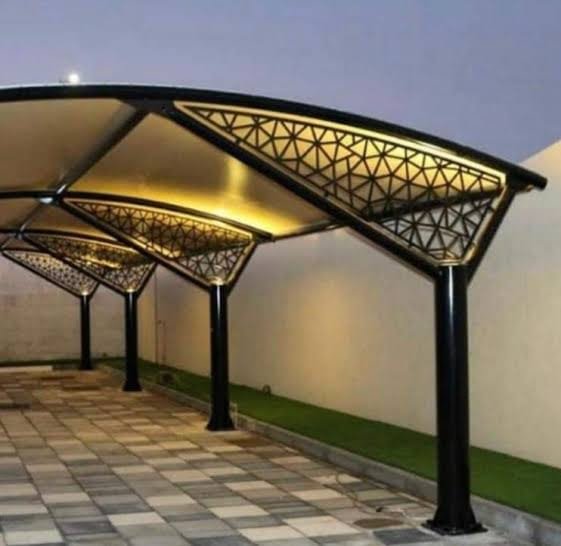
The steel frame, if properly protected and maintained, can outlast several fabric replacements. This makes a weatherproof tensile shade a long-term asset rather than a temporary solution.
Frequently Asked Questions
Is a weatherproof tensile shade fully waterproof?
Yes, if it uses a PVC or PVDF-coated membrane. HDPE shade net provides sun protection but lets rain through.
Can a weatherproof tensile shade survive strong winds?
Yes. When the foundations, steel sections and cables are designed for local wind exposure, tensile structures perform very well in storms.
Does fabric make the area cooler than a metal roof?
In most cases, yes. Light-coloured membranes reflect sunlight and allow hot air to escape, so the space underneath feels cooler than under a metal sheet roof.
How do I clean my tensile shade?
Use clean water, a mild soap and a soft brush. Avoid harsh chemicals, solvents and pressure washers at close range.
Conclusion
A weatherproof tensile shade can handle Pakistan’s heat, monsoon rain, dust and storms very well, but only when the fabric, shape, foundations and steel protection are chosen with the local climate in mind. Light-coloured, UV-stabilised fabric keeps spaces cool. Curved shapes and correct tension deal with rain. Solid engineering keeps the structure standing in strong winds.
Planning a shade for your home, office, school, mosque or parking area? Contact Imperial Tensiles for a free site visit and a weatherproof tensile shade designed for your exact location.
Related guides: Want to fit a sail yourself? Learn how to install a shade sail safely, step by step.