PTFE vs ETFE is one of the most searched questions in modern fabric architecture, and for good reason. Both materials are fluoropolymers, both carry the “high-performance” label, and both appear on some of the world’s most famous roofs. Yet they behave very differently on site. One is a woven glass-fibre fabric coated with PTFE; the other is a clear plastic foil usually installed as inflated cushions. Choosing the wrong one can mean a hot, glary space, a leaking roof or a budget that doubles overnight.
This guide compares PTFE vs ETFE across nine practical factors: light, heat, weight, durability, fire, acoustics, maintenance, cost and typical uses. We also explain where more affordable fabrics such as PVC/PVDF-coated polyester fit in, so you can make a confident decision for a stadium, mall, atrium, school or car park.
PTFE vs ETFE: Quick Answer
If you only have a minute, here is the short version of PTFE vs ETFE:
- PTFE = strong, white, translucent woven fabric. Best for cool shade, long spans and hot, sunny climates.
- ETFE = clear, ultra-light foil, usually as inflated cushions. Best for daylight, transparency and greenhouses.
- Both last around 25 years or more when well designed and maintained.
- Neither is usually needed for small car parks or home shades, where PVDF-coated PVC is more economical.
Keep reading for the full PTFE vs ETFE comparison, including a table, real project scenarios and lifecycle cost tips.
What Is PTFE Membrane?
PTFE stands for polytetrafluoroethylene, the same family of material known in kitchens as a non-stick coating. In architecture, “PTFE membrane” usually means woven glass-fibre fabric coated with PTFE. The glass fibre provides strength; the PTFE coating protects it from UV, water, dirt and chemicals.
Key characteristics of PTFE glass-fibre membrane:
- Very strong and stiff compared with most fabrics
- Bright white surface that reflects a large share of solar heat
- Translucent, typically allowing roughly 10–20% of daylight through, so spaces feel bright but not glaring
- Self-cleaning surface: rain washes most dust away
- Non-combustible glass base, giving excellent fire performance
- Expected service life of 25 to 30 years or more when properly designed
PTFE glass fibre is the material behind landmark roofs such as the Hajj Terminal in Jeddah, the umbrellas of Masjid an-Nabawi and the O2 in London. You can see more of these in our list of famous tensile structure examples.
What Is ETFE Membrane?
ETFE stands for ethylene tetrafluoroethylene. It is a tough, transparent fluoropolymer foil, not a woven fabric. ETFE is usually installed in one of two ways:
- Pneumatic cushions: two or more layers of foil clamped into aluminium frames and kept inflated by a small air-handling unit.
- Single-layer tensioned foil: stretched across a supporting structure, often with cables to resist wind.
Key characteristics of ETFE:
- Very high light transmission, often around 90–95% for clear foil
- Extremely light: only a small fraction of the weight of equivalent glass
- Transmits UV light, which is why it is popular for botanical domes
- Can be printed with patterns (fritting) to control solar gain
- Long expected life, commonly quoted at 25 years or more
- Requires a continuous air supply for cushion systems
Famous ETFE projects include the Eden Project in the UK, the Allianz Arena in Munich and the Beijing “Water Cube”.
PTFE vs ETFE: 9 Key Differences
1. Light Transmission
This is the biggest difference in the PTFE vs ETFE debate. ETFE is almost as clear as glass, so it is chosen where views of the sky or maximum daylight matter: atriums, greenhouses, swimming pools and shopping streets. PTFE is translucent rather than transparent. It glows with soft, diffused light and removes harsh shadows, which suits stadiums, terminals and courtyards in hot climates.
2. Heat and Solar Control
In a country with strong sun, heat gain is critical. White PTFE reflects most of the solar energy that hits it and absorbs very little, so the space below stays noticeably cooler. Clear ETFE lets a lot of solar energy in, which can overheat a space unless the foil is printed, tinted or combined with shading. Multi-layer ETFE cushions improve insulation, but in Pakistan’s summer, PTFE usually wins on comfort for open-air shading.
3. Weight and Structure
Both are lightweight compared with glass or concrete. ETFE foil itself is extremely light, but cushion systems need aluminium frames, air pipes and a support grid. PTFE fabric is heavier per square metre than ETFE foil but spans further between supports, so it often needs fewer steel members for a large open canopy.
4. Strength and Span
PTFE glass fibre has much higher tensile strength than ETFE foil. That means PTFE can be stretched over wide spans between masts and cables, while ETFE cushions are usually limited to a few metres across before an intermediate support or cable is needed. For long-span roofs, PTFE is the natural choice.
5. Durability and Lifespan
Both materials are built for long service. PTFE glass fibre roofs and ETFE systems are both commonly expected to last 25 years or more. PTFE is very resistant to UV and chemicals; ETFE is resistant too and does not yellow easily. The weak point of ETFE cushions is the mechanical system: fans, valves and pipes need maintenance to keep the cushions inflated.
6. Fire Performance
PTFE glass fibre has a non-combustible glass base, so it is often rated highly in fire tests. ETFE is not non-combustible, but in a fire it tends to soften and open up, letting smoke and heat escape, and it does not drip burning droplets in the same way as some plastics. Always check local fire regulations and the product’s test certificates.
7. Acoustics
Rain on ETFE cushions can be noisy because the foil is thin and drum-like; designers add rain suppressors or mesh layers to reduce this. PTFE fabric is quieter in rain and can be combined with acoustic liners for halls and auditoriums.
8. Maintenance
PTFE has a natural self-cleaning surface and needs only periodic inspection and occasional washing. ETFE also sheds dirt well, but cushion systems need regular checks of air pressure, sensors and the inflation unit. For simple, low-maintenance shading, PTFE or a good PVDF-coated fabric is easier to live with. Our tensile shade maintenance tips cover the basics for any membrane.
9. Cost
Both are premium materials. In most markets, ETFE cushion systems cost more per square metre than PTFE canopies once frames and air handling are included, while PTFE costs much more than PVC/PVDF-coated polyester. Imported material, specialist welding equipment and skilled installers all affect the final price.
PTFE vs ETFE Comparison Table
| Factor | PTFE (glass fibre) | ETFE (foil/cushion) |
|---|---|---|
| Form | Woven fabric with coating | Transparent foil |
| Light | Translucent, diffused | Clear, high transmission |
| Solar heat | Reflects most heat | Lets more heat in |
| Span | Long spans | Short spans per cushion |
| Lifespan | 25–30+ years | 25+ years |
| Fire | Non-combustible base | Self-venting, check rating |
| Rain noise | Quiet | Can be noisy |
| Maintenance | Low | Air system checks |
| Best for | Stadiums, terminals, courtyards | Atriums, domes, greenhouses |
Where Does PVC or PVDF Fabric Fit?
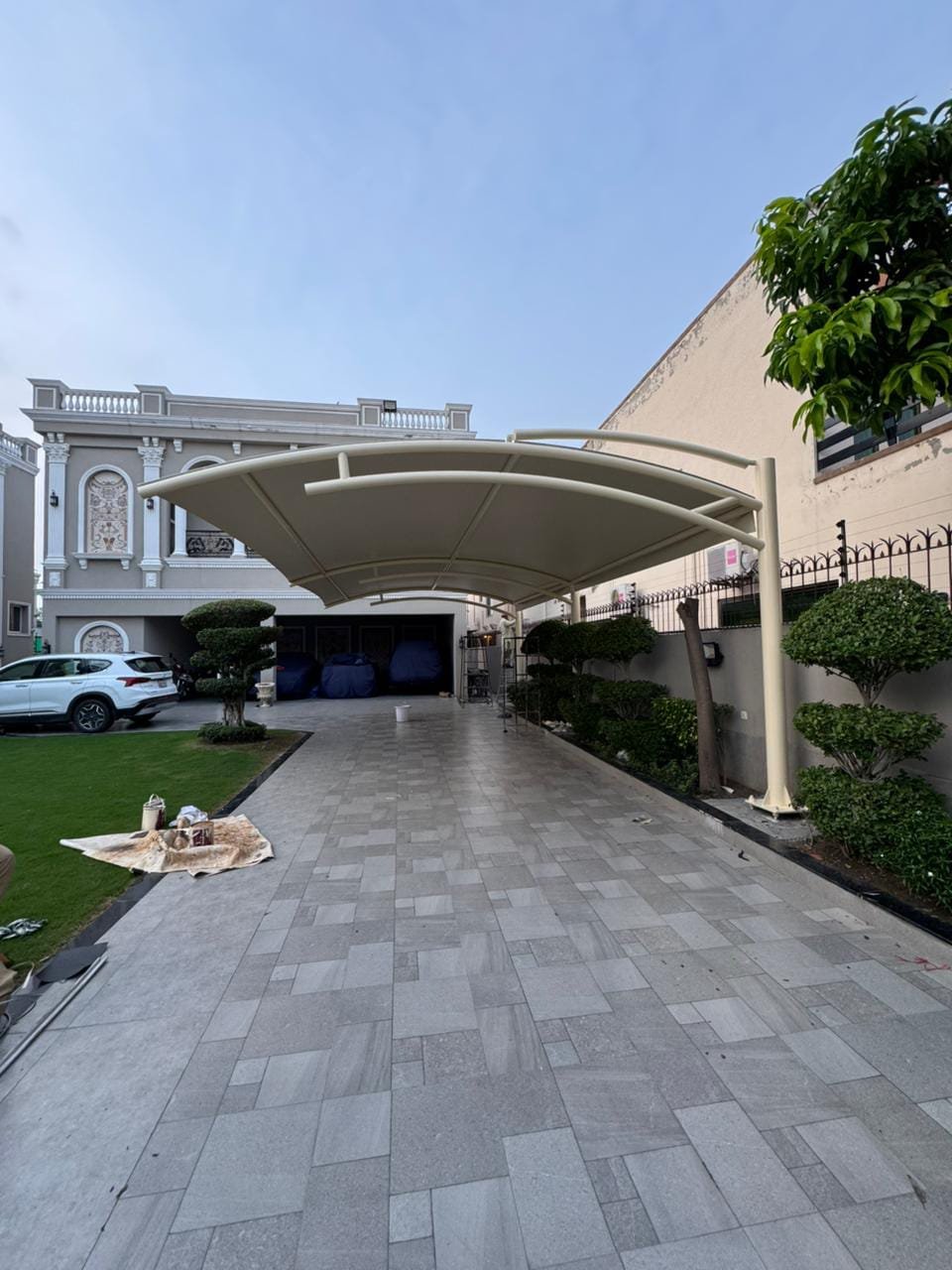
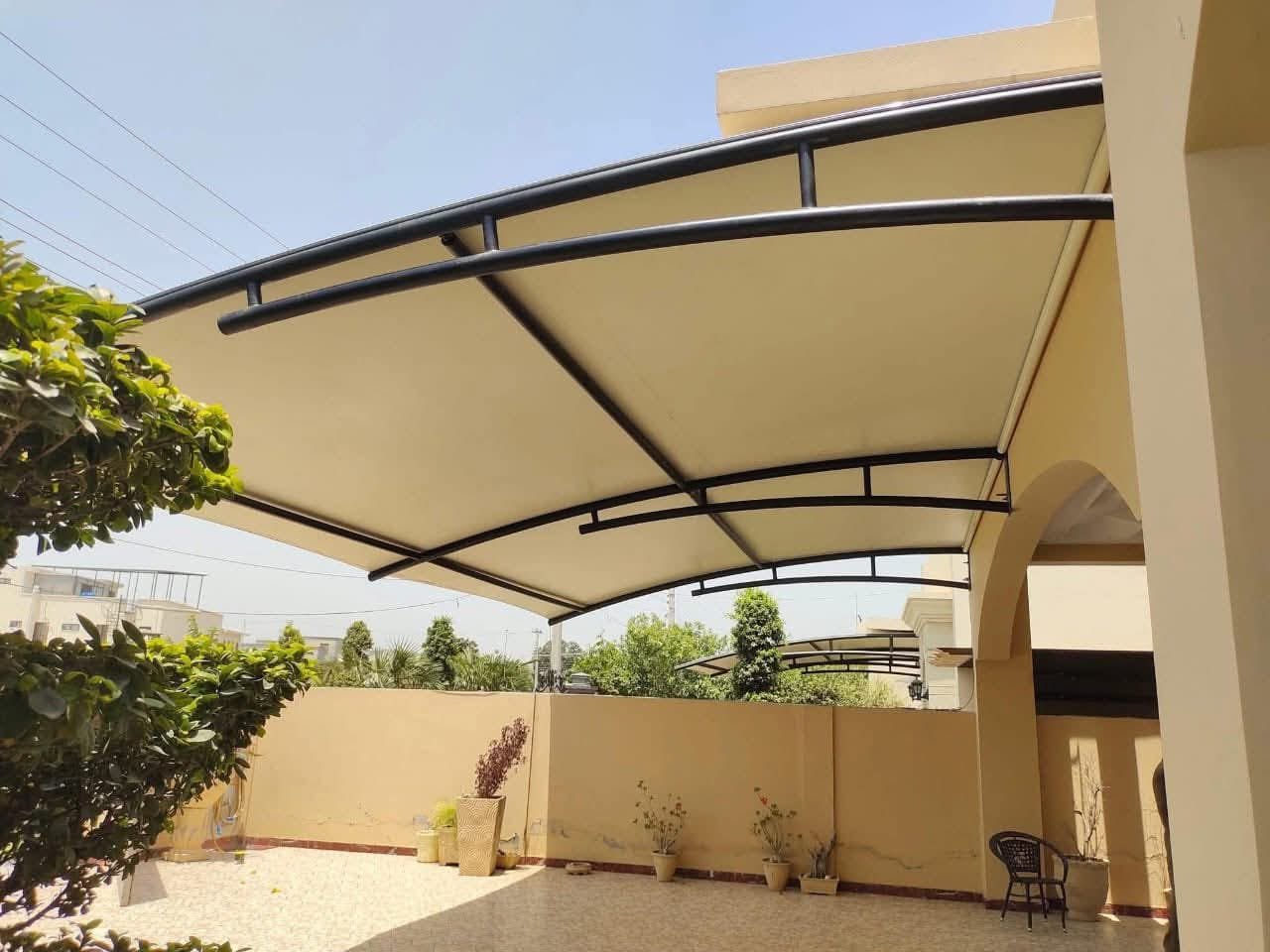
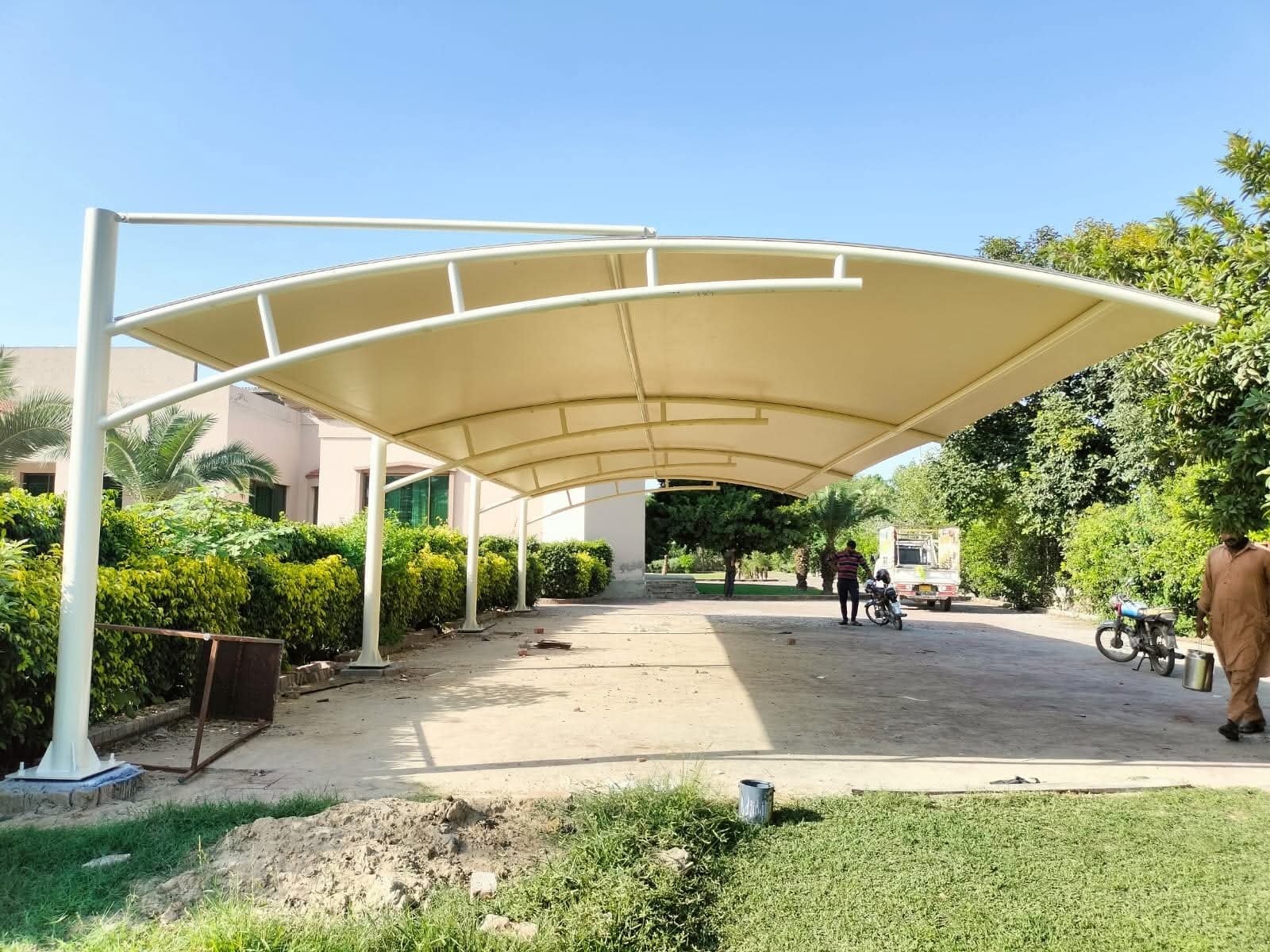
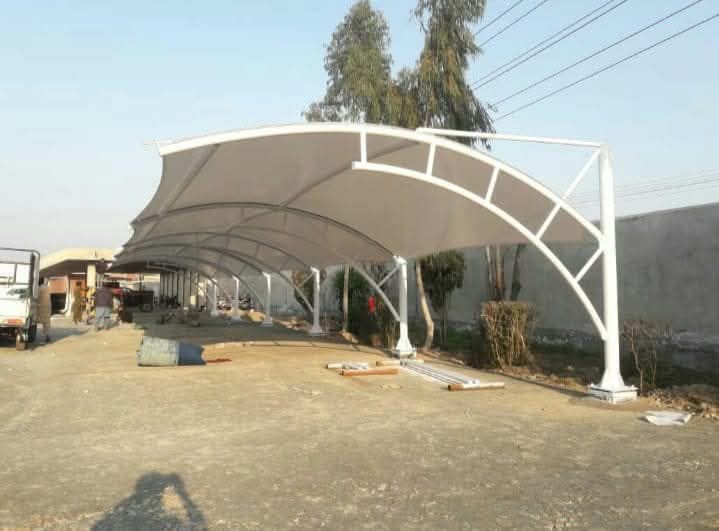
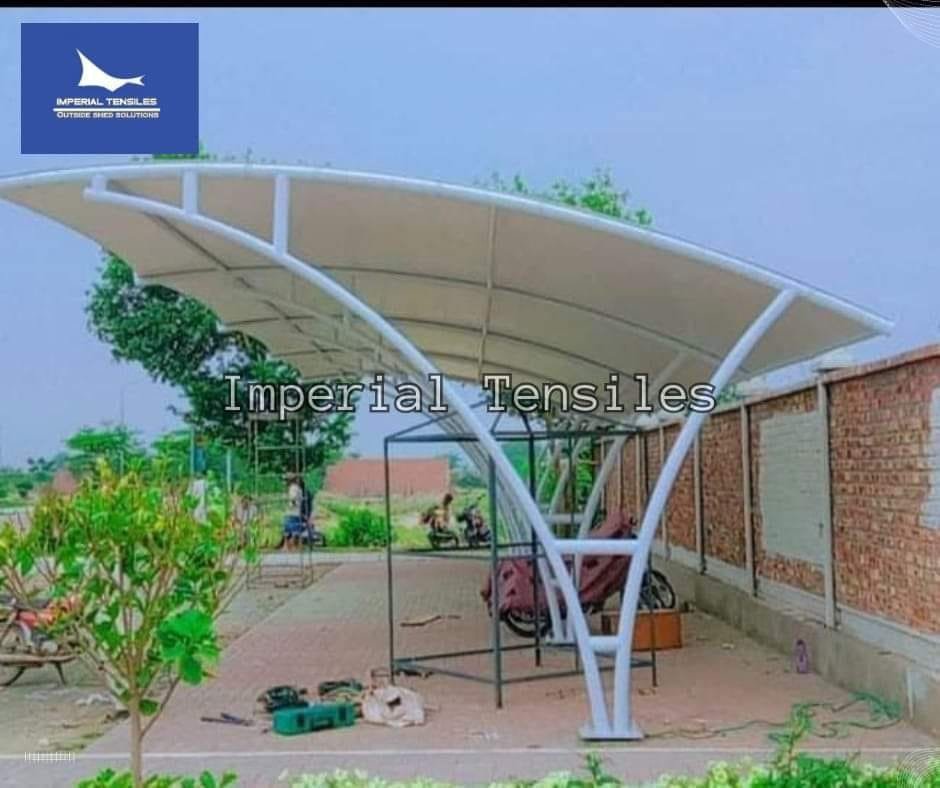
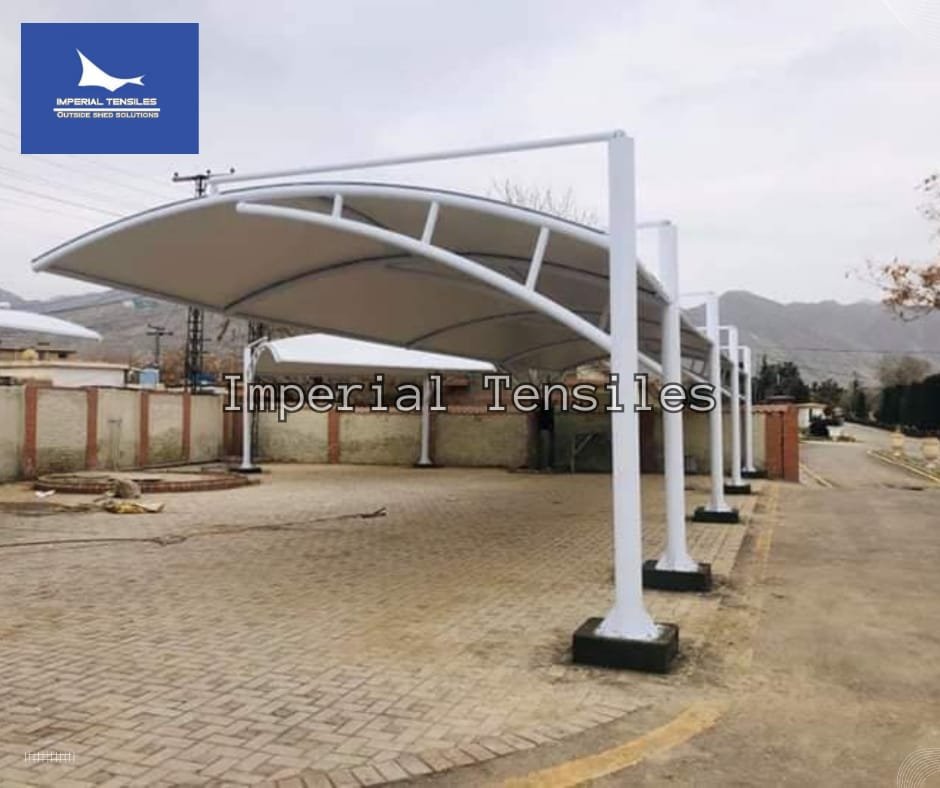
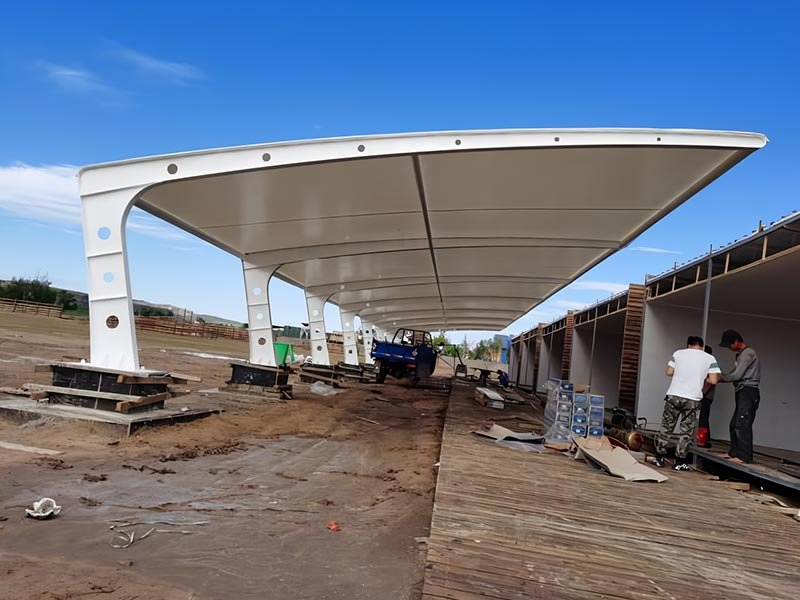
Most projects in Pakistan do not need a PTFE vs ETFE level material. For car parking sheds, schools, restaurants, rooftops and petrol pumps, PVC-coated polyester with a PVDF top coat gives an excellent balance of strength, life and cost. It is flexible, easy to fabricate locally and typically lasts 10 to 20 years depending on quality. HDPE shade net is a cheaper option for shade-only use where rain protection is not required.
Read our full guide to PVC vs HDPE vs PVDF tensile fabric to compare these everyday options.
How to Choose Between PTFE vs ETFE
Use these quick rules:
- Need maximum daylight and views of the sky? Choose ETFE.
- Need cool shade in strong sun over a large area? Choose PTFE.
- Need a long clear span with few columns? Choose PTFE.
- Building a greenhouse, botanical dome or indoor street? ETFE is usually better.
- Need a decorative printed or coloured façade? ETFE offers more options.
- Working to a medium budget for a car park, café or school? Choose quality PVC/PVDF fabric instead.
Questions to Ask Your Designer
- What light transmission and solar heat gain will this membrane give?
- What spans and support spacing does the design use?
- How will wind uplift and rainwater be handled?
- What are the fire ratings and test certificates?
- What maintenance and warranty are included?
For a broader checklist, see our questions to ask a tensile shed contractor.
PTFE vs ETFE in Hot Climates Like Pakistan
Pakistan’s plains face summer temperatures well above 40°C, intense UV, monsoon downpours and seasonal dust storms. In these conditions:
- PTFE performs very well because it reflects heat, cleans itself in rain and stays strong under constant UV.
- ETFE can work for enclosed, air-conditioned atriums if the foil is printed or layered to cut solar gain, but it is rarely the best choice for open shade.
- PVDF-coated PVC is the practical choice for most commercial and residential canopies.
Wind design is essential for any membrane. Learn how we size anchors and cables in our article on designing tensile structures for wind and dust storms.
Common Myths About PTFE vs ETFE
“ETFE is just plastic film, so it is weak.”
ETFE foil is thin, but it is a tough engineering polymer designed for decades of outdoor exposure. The structural system around it, including frames, cables and air pressure, gives it stability.
“PTFE makes a space dark.”
PTFE is translucent. A white PTFE roof gives bright, even daylight that many people find more comfortable than direct sun through glass.
“Both are too expensive for normal projects.”
They are premium, yes, but for medium projects you can get much of the same performance from quality PVDF-coated fabric at a fraction of the price.
PTFE vs ETFE: 6 Real Project Scenarios
Theory is useful, but most owners decide by picturing their own site. Here is how the PTFE vs ETFE choice usually plays out in real projects.
Scenario 1: Stadium Stand Canopy
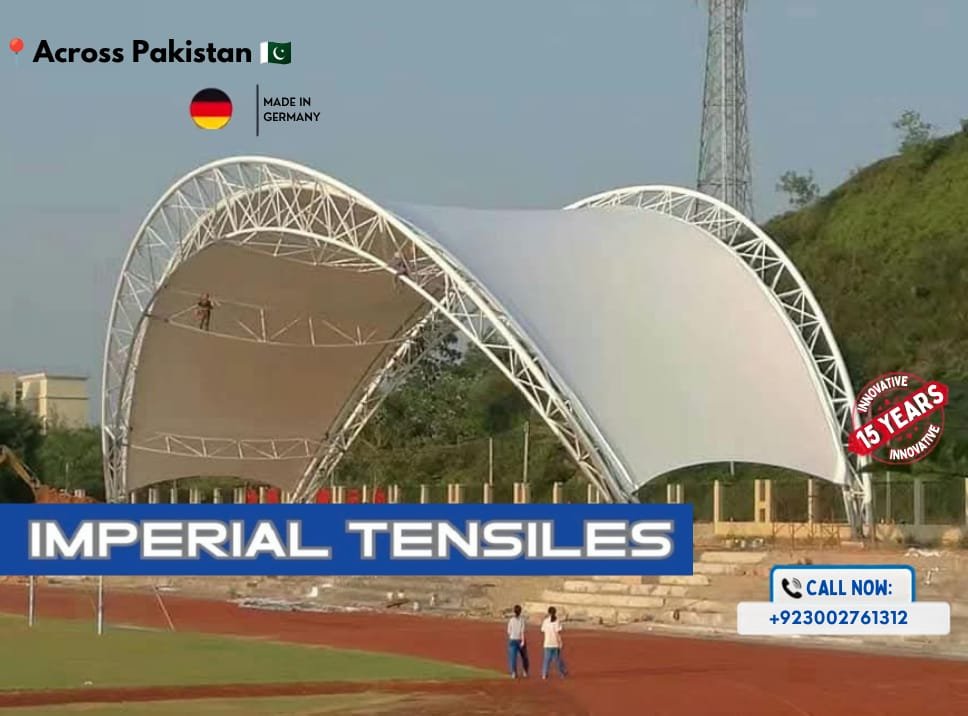
A cricket or football stadium needs shade for thousands of spectators over a long cantilever. PTFE wins here because of its strength, long span, heat reflection and quiet behaviour in rain. In the PTFE vs ETFE comparison for stadium stands, ETFE is only chosen when the club wants a transparent or colour-lit look and has a large budget.
Scenario 2: Shopping Mall Atrium
An enclosed mall atrium wants daylight to reach shops on every floor. ETFE cushions with a printed pattern are ideal: they let in light, reduce weight on the structure and can be lit at night. PTFE would make the atrium feel more like a covered courtyard.
Scenario 3: Botanical Garden or Greenhouse
Plants need UV and high daylight. ETFE is the clear winner for a conservatory, nursery dome or rooftop garden enclosure.
Scenario 4: Mosque Courtyard or Eidgah
Worshippers need cool, comfortable shade, often for short peak periods. PTFE umbrellas or fixed PTFE canopies follow the proven Madinah model. For smaller budgets, PVDF-coated fabric umbrellas give a similar effect.
Scenario 5: Airport Drop-off or Bus Terminal
Long, open walkways and kerbside areas need durable, low-maintenance shade. PTFE handles heat, dust and constant use. ETFE is sometimes used for terminal skylights inside the building.
Scenario 6: Hotel Pool or Rooftop Lounge
Guests want shade but also a view of the sky. A combination works well: ETFE or clear panels over a small seating area, and PTFE or PVDF fabric sails over sun loungers. See our guide to swimming pool shade structures for practical layouts.
PTFE vs ETFE: Lifecycle Cost Thinking
The cheapest material on day one is not always the cheapest over 25 years. When you compare PTFE vs ETFE, look at the full lifecycle:
- Initial cost: material, steel, frames, air systems, fabrication and installation.
- Energy impact: PTFE can reduce cooling loads by reflecting heat; ETFE can reduce lighting loads by admitting daylight.
- Maintenance: PTFE needs inspection and cleaning; ETFE also needs air-system servicing and occasional cushion repairs.
- Replacement cycle: both offer long service, but a cheap fabric may need replacing two or three times in the same period.
- Downtime: consider whether repairs will close a stadium, mall or terminal.
A balanced lifecycle view often shows that the right premium membrane pays for itself in comfort, energy savings and fewer replacements. For medium-sized projects, the same thinking may point you toward a quality PVDF fabric with a long warranty.
Installation Considerations
Neither material is a simple “buy and fix” product. Both need:
- Computer form-finding and patterning to cut panels precisely
- Specialist welding (heat sealing) in a clean workshop
- Careful handling, because PTFE glass fibre should not be folded sharply and ETFE foil must be protected from scratches
- Experienced installers to apply the correct pre-stress
- Properly designed steelwork and foundations
Frequently Asked Questions
Which is better, PTFE or ETFE?
Neither is better in every case. In the PTFE vs ETFE choice, PTFE is better for shading, long spans and hot climates, while ETFE is better for transparency, daylight and plant growth.
Is ETFE cheaper than glass?
ETFE systems can reduce the cost of the supporting structure because they are so light, but the material and air system are not cheap. Overall cost depends on the project.
How long does PTFE membrane last?
High-quality PTFE-coated glass fibre is commonly expected to last 25 to 30 years or more with basic maintenance.
Can PTFE or ETFE be used for car parking sheds?
They can, but it is rarely cost-effective. PVDF-coated PVC fabric is the standard choice for car parking sheds in Pakistan.
Does ETFE block UV rays?
Standard clear ETFE transmits much of the UV spectrum, which is why it is used for greenhouses. If UV protection is needed, use printed or treated ETFE, or choose PTFE or PVDF fabric.
Is PTFE or ETFE more environmentally friendly?
Both reduce material use compared with heavy roofs. In the PTFE vs ETFE comparison, ETFE uses very little raw material and is recyclable, while PTFE’s long life and heat reflection can cut cooling energy. The greener option is the one that fits the climate and lasts longest on your site.
Conclusion
The PTFE vs ETFE decision comes down to one question: do you want shade or light? PTFE gives cool, glowing, long-span shade that thrives in harsh sun. ETFE gives crystal-clear daylight and dramatic, lightweight envelopes. For most practical projects in Pakistan, PVDF-coated fabric delivers the best value. Not sure which suits your site? Contact Imperial Tensiles for expert advice and a free quotation.
Further reading: Designing Buildings – ETFE.